Spending upwards of $370 for a specialist medical consultation might feel like the safest way to address thinning hair, yet for many Australians, the medical route isn’t always the fastest path to actual regrowth. When you’re noticing more scalp than usual in the mirror, the confusion surrounding a trichologist vs dermatologist for hair loss often leads to expensive delays and missed opportunities for recovery. It’s completely natural to feel anxious about making the wrong choice while your hair density continues to decline.
You deserve a solution that goes beyond a brief visual inspection. This 2026 guide is designed to replace that uncertainty with a clear, evidence-based strategy for restoring your hair. We’ll explore the critical distinctions between medical skin doctors and clinical hair specialists, providing you with a transparent look at Australian qualification standards and rising consultation costs. By the end of this article, you’ll have a definitive diagnostic plan to help you choose the right specialist and embark on a non-surgical journey toward lasting hair health.
Key Takeaways
- Understand the fundamental difference in focus between medical doctors and clinical hair specialists to avoid investing in the wrong type of consultation.
- Use a clear decision framework for evaluating a trichologist vs dermatologist for hair loss based on whether you require medical intervention or a dedicated plan for follicle restoration.
- Learn why a standard five-minute visual inspection often falls short and how microscopic hair analysis provides a more precise diagnostic foundation for regrowth.
- Identify the specific “urgency factors”, such as sudden patches or scalp pain, that indicate you should prioritise a medical referral over a clinical consultation.
- Discover the advantages of choosing a specialised hair loss clinic that focuses exclusively on non-surgical treatments for male and female hair loss.
Understanding the “Hair Doctor” Landscape in Australia
The search for a “hair doctor” in Australia has never been more active. As environmental stressors, nutritional gaps, and lifestyle factors impact our health, more Australians are seeking professional help for thinning hair and scalp issues. However, the term “hair doctor” is often used as a catch-all phrase that ignores the significant clinical differences between specialists. Choosing between a trichologist vs dermatologist for hair loss requires an understanding of their distinct training paths and areas of expertise. It isn’t just about the title; it’s about the focus of their practice.
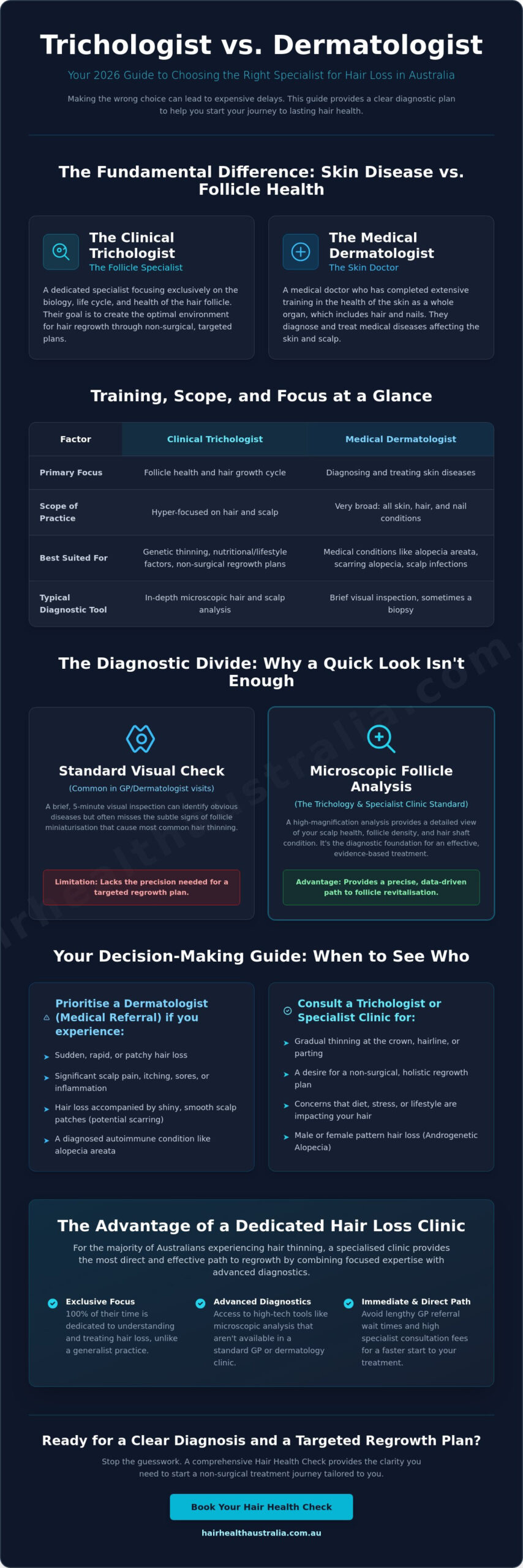
A dermatologist is a medical doctor who has completed extensive university training followed by years of registrar experience in general skin health. They treat the skin as a whole organ, including nails and hair. They are the authorities on medical conditions like alopecia areata or scarring alopecia. In contrast, a trichologist is a dedicated specialist who focuses exclusively on the biology and life cycle of the hair follicle. If you are asking yourself, What is trichology?, it is the scientific study of hair and scalp health from a non-surgical perspective. While their roles overlap, their diagnostic approach and treatment philosophies differ. One looks at the skin for disease, while the other looks at the follicle for growth potential. The roles differ, but both are essential to the landscape.
The Role of the Australian Institute of Trichologists (AIT)
In Australia, the Australian Institute of Trichologists (AIT) sets the benchmark for clinical excellence. Unlike a generic “hair loss consultant” who might lack formal education, a certified trichologist has completed rigorous training in hair science and scalp pathology. Many specialised clinics in Sydney now act as a bridge between the cosmetic and medical worlds. They provide a high-tech environment for follicle analysis that you won’t typically find in a standard medical practice. This clinical rigour ensures that patients receive evidence-based advice rather than marketing-led suggestions.
The General Practitioner (GP) Starting Point
Your local GP is often the first port of call when you notice thinning. They are essential for identifying systemic issues, such as iron deficiencies or thyroid imbalances, through blood tests. However, a standard GP visit is often too brief to conduct the deep-dive analysis required for complex hair thinning. In the Australian healthcare system, a GP can provide a referral to a dermatologist, but this often involves significant out-of-pocket costs and lengthy waiting periods. For those seeking a more immediate and specialised diagnostic path, a comprehensive hair health check can provide the clarity needed to start a targeted treatment plan without the wait.
Trichologists vs Dermatologists: Training, Scope, and Specialist Focus
The fundamental difference between a trichologist vs dermatologist for hair loss lies in the breadth versus the depth of their training. A dermatologist is a medical doctor who has spent over a decade studying the skin as a complete organ. Their expertise is vast, covering everything from melanoma to severe acne. However, because their scope is so wide, hair loss is often just one small part of a much larger clinical workload. They are trained to identify disease, but they may not always have the time to delve into the nuances of follicle revitalisation.
Trichologists take a different path. They dedicate their entire professional education to the science of the hair and scalp. While they don’t hold medical degrees, they possess a hyper-focused understanding of the hair growth cycle. This “Skin vs. Follicle” distinction is vital. If your scalp is diseased, you need a doctor. If your follicles are miniaturising, you need a hair specialist. Australian government health advice on hair loss confirms that many forms of thinning are non-scarring and respond well to targeted, non-surgical intervention.
There is a common myth that only a medical doctor can facilitate regrowth. This simply isn’t accurate. Most cases of thinning hair in Australia are related to genetics, nutrition, or lifestyle rather than systemic disease. A specialist who spends 100% of their time on follicle health is often better equipped to identify the subtle triggers of thinning. They don’t just look at the surface; they look at the environment in which the hair grows. It’s a methodical, science-based approach to restoration.
What a Dermatologist Does Best
Dermatologists excel when the scalp itself is the primary issue. They are the only professionals qualified to treat inflammatory conditions like scarring alopecia, where the skin is actively being replaced by scar tissue. If you need a biopsy to rule out a rare skin condition or require high-strength pharmaceutical prescriptions that only a doctor can provide, a dermatologist is the correct choice. They handle the “sick” skin that requires medical intervention.
For individuals interested in the cosmetic aspects of skin care, a specialised medical aesthetic centre like Aussie Skincare Clinic offers advanced treatments and injectables that focus on rejuvenation rather than disease management.
What a Trichologist Does Best
A trichologist is best suited for those experiencing gradual thinning or pattern baldness. They focus on the “why” behind the hair loss by looking at the microscopic health of each follicle. Instead of a surface-level glance, they develop long-term, non-surgical regrowth programmes. These plans often integrate nutritional advice and clinical treatments to revitalise dormant follicles. If you want a detailed roadmap for your hair, booking a comprehensive hair health check is a logical first step to determine your follicle’s potential for recovery.
The Diagnostic Divide: Why a Visual Check Isn’t a Hair Health Scan
A common frustration for many Australians is the brevity of a standard medical consultation. When you wait weeks for an appointment only to receive a five-minute visual inspection, it’s difficult to feel confident in the result. While a quick look can identify obvious skin conditions, it rarely uncovers the subtle physiological changes occurring beneath the surface. This is a critical point in the trichologist vs dermatologist for hair loss discussion; a general medical practitioner or a busy dermatologist might focus on the presence of disease, whereas a clinical specialist focuses on the health of the individual follicle.
Relying solely on what the naked eye can see often leads to misdiagnosis or delayed treatment. By the time hair loss is visible in the mirror, you may have already lost up to 50% of your hair density in that area. Understanding the medical diagnosis and treatment of hair loss is important, but a clinical scan provides the data needed to act before the loss becomes permanent. Accurate data is the only way to stop wasting money on “miracle” shampoos that promise results they cannot biologically deliver. Without a microscopic view, you’re essentially guessing at a solution.
Microscopic Scanning vs. Visual Inspection
Digital trichoscopy allows us to see what is happening at a cellular level. We can identify active follicles versus those that have entered a dormant phase. We measure hair density and the specific diameter of individual strands to track progress over months. Microscopic hair analysis is a non-invasive diagnostic tool used for identifying genetic thinning by detecting miniaturisation before it becomes visible. This level of detail ensures your treatment plan is based on evidence, not guesswork. It allows for a customised approach that targets your specific thinning pattern.
Identifying the Root Cause: Genetic vs. Reactive Loss
Distinguishing between permanent genetic thinning, such as Male Pattern Baldness, and temporary reactive shedding, known as Telogen Effluvium, is essential. These conditions require vastly different approaches. A specialist also examines the scalp environment, as issues like excess sebum or inflammation can hinder the success of any regrowth treatment. To get a clear picture of your current hair status, you can learn more about our comprehensive Hair Health Check. This process ensures we address the root cause, providing a clear path toward restoring your hair density without unnecessary medical intervention.
When to See a Trichologist vs. a Dermatologist for Your Hair
Deciding which professional to visit is the first critical step toward recovery. It requires an honest assessment of your current scalp condition and your long-term goals. If you are struggling with the choice of a trichologist vs dermatologist for hair loss, consider whether you are seeking a medical diagnosis for a skin disease or a clinical strategy for follicle restoration. One treats the pathology of the skin; the other treats the life cycle of the hair. Matching your symptoms to the right specialist’s toolkit prevents wasted time and ensures you receive the most relevant care from the start.
The “Urgency Factor” is the clearest indicator for a medical referral. If you experience sudden, localized hair loss or physical discomfort, a dermatologist’s medical training is indispensable. They possess the authority to prescribe pharmaceutical interventions or perform biopsies that a clinical specialist cannot. However, for the “Restoration Factor”, which applies to the vast majority of Australians experiencing gradual thinning, a hair specialist provides a more granular level of care. They track the miniaturisation of follicles over months, ensuring your treatment evolves with your hair’s specific needs. Many patients eventually find success in a collaborative care model where both specialists play a role.
Symptoms That Require a Dermatologist
You should prioritise a medical consultation if you notice sudden, patchy hair loss, which may indicate Alopecia Areata. Severe itching, burning, or visible inflammation of the scalp also requires a doctor’s attention to rule out infection or autoimmune conditions. Additionally, any suspicious moles or lesions within the hairline must be examined by a dermatologist to ensure they aren’t symptomatic of more serious skin health issues. These cases involve “sick” skin that needs immediate medical intervention rather than a growth programme.
Symptoms That Require a Trichologist or Hair Specialist
A clinical hair specialist is the appropriate choice for addressing gradual thinning or a widening part line. If you are dealing with receding hairlines or a general loss of hair volume following a period of stress or illness, a trichologist can help identify the underlying triggers. They specialise in clinical approaches to restoring hair health that focus on revitalising the follicle without the need for surgery. This approach is ideal for those who want to stop the progression of pattern baldness and maximise their natural hair density through evidence-based, non-invasive methods.
If you are unsure which path is right for your specific situation, the most effective way to gain clarity is to book a comprehensive hair health check to evaluate your follicle’s potential for regrowth. Understanding the nuances of a trichologist vs dermatologist for hair loss will help you invest your resources into the specialist most likely to deliver the results you desire.
Beyond the Title: Why a Dedicated Hair Loss Clinic in Sydney Provides the Best Outcome
While the choice between a trichologist vs dermatologist for hair loss is often presented as a binary decision, the most successful outcomes in 2026 usually come from a third path: the dedicated clinical hair restoration centre. A general dermatology practice is designed to treat the entire organ of the skin, meaning your hair concerns must compete for time with skin cancer checks and acne treatments. In contrast, a specialised clinic focuses 100% of its resources, technology, and clinical expertise on follicle recovery. For most Australians experiencing non-scarring thinning, a “clinically-backed” approach is more valuable than a medical title alone. Before committing to any provider, it’s worth reviewing what separates a genuine evidence-based facility from a cosmetic sales environment — our essential checklist for choosing a non-surgical hair loss clinic in Sydney outlines exactly what to look for in 2026.
The Hair Health Australia difference lies in our commitment to precision. Generic pharmacy solutions or one-size-fits-all prescriptions often fail because they don’t account for the unique biological environment of your scalp. By choosing a dedicated facility, you gain access to a level of customisation that goes beyond a standard medical script. We develop individualised Male Hair Loss Treatment and Female Hair Loss Treatment plans that are grounded in science and adjusted based on your real-time progress. It is a systematic process designed to replace uncertainty with a clear, actionable path forward.
The Power of Non-Surgical Regrowth Programmes
Modern hair restoration has evolved beyond invasive procedures. Our programmes utilise a combination of stimulation therapies and DHT blockers that work synergistically to revitalise miniaturising follicles. This multi-faceted approach addresses the hormonal triggers of loss while simultaneously improving the scalp’s nutrient delivery. Consistency is the foundation of any successful regrowth journey. Rather than “doctor-shopping” for a quick fix, our patients benefit from ongoing monitoring and data-driven adjustments to their treatment plans. This ensures that as your hair health improves, your programme evolves to maintain those results.
Taking the First Step in Sydney
Starting your journey at Hair Health Australia begins with a comprehensive clinical assessment. During your first consultation in Sydney, we use advanced digital trichoscopy to establish a baseline for your hair density and follicle health. We understand the significant emotional toll that thinning hair takes on your confidence. Our specialists provide a supportive, professional environment where your concerns are heard and addressed with clinical honesty. We don’t just offer treatments; we offer a partnership in your restoration journey. You can gain the clarity you need by taking that first step toward professional care. Book your clinical hair assessment at our Sydney clinic today.
Securing Your Hair’s Future with Data-Driven Care
Choosing between a trichologist vs dermatologist for hair loss shouldn’t be a source of further anxiety. While dermatologists provide essential medical care for inflammatory scalp diseases, a clinical hair specialist offers the dedicated, microscopic focus required to revitalise thinning follicles. You now understand that a five-minute visual check is rarely enough. True restoration depends on identifying miniaturisation before it becomes permanent. By moving beyond generic pharmacy solutions and prioritising a specialised diagnostic approach, you can take control of your hair’s density with confidence.
At Hair Health Australia, we combine over 15 years of clinical experience in Sydney with advanced microscopic diagnostic technology to create your personalised roadmap. Our specialised non-surgical regrowth protocols are designed to deliver realistic, science-backed results without the need for invasive procedures. It’s time to stop guessing and start following a plan tailored to your unique biology. Book Your Comprehensive Hair Health Check in Sydney today. Your journey toward restored hair density and renewed confidence is well within reach.
Frequently Asked Questions
Is a trichologist a doctor in Australia?
No, a trichologist is not a medical doctor. They are hair and scalp specialists who have completed clinical training in the science of trichology, often through organisations like the Australian Institute of Trichologists. While they don’t hold medical degrees or perform surgery, they possess a hyper-focused understanding of the hair growth cycle and follicle health. This makes them experts in identifying the biological and lifestyle triggers behind thinning hair.
Will a dermatologist help me regrow my hair or just treat my scalp?
A dermatologist can help with regrowth, but their primary clinical focus is on treating the scalp as a medical organ. They are the authorities on diagnosing skin diseases, infections, and autoimmune conditions like alopecia areata. If your hair loss is caused by a medical pathology, a dermatologist is essential. However, for those seeking a long-term, non-surgical strategy for restoring hair density, a clinical specialist often provides more frequent monitoring and detailed follicle analysis.
Do I need a GP referral to see a trichologist in Sydney?
You don’t need a GP referral to book an appointment with a trichologist or a specialised hair loss clinic. This is a significant advantage for those who want to bypass long medical waiting lists and start their diagnostic process immediately. While a referral is necessary to claim a Medicare rebate for a dermatologist, trichology operates as a private clinical service that you can access directly.
How much does a trichologist cost vs a dermatologist?
Dermatology fees in Australia have risen recently, with the April 2026 Cleanbill report showing a national average of $230.22 for an initial consultation, though some Sydney specialists charge up to $370. In contrast, an initial consultation with a trichologist typically ranges between $110 and $250. This price often includes a more lengthy, in-depth discussion about your hair history and a detailed scalp examination compared to a standard medical visit.
Can a trichologist prescribe Minoxidil or Finasteride?
Trichologists cannot issue medical prescriptions because they are not registered doctors. They can, however, recommend non-prescription clinical treatments and provide scientific guidance on how to use topical solutions effectively. When considering the path of a trichologist vs dermatologist for hair loss, remember that a trichologist often works in tandem with your GP if pharmaceutical intervention is required as part of your regrowth programme.
What happens during a microscopic hair analysis?
During this analysis, a specialist uses a high-magnification digital trichoscope to examine your scalp and hair follicles in real time. This process allows us to detect “miniaturisation”, where follicles shrink before they stop producing hair entirely. We measure hair density and strand diameter to establish a data-driven baseline. This objective evidence is used to create a customised treatment plan and to track your progress with clinical precision over several months.
Is hair loss treatment covered by Medicare or private health insurance?
Medicare generally only provides rebates for dermatologist consultations if you have a valid GP referral; it doesn’t cover the cost of hair loss treatments themselves. Trichology consultations and clinical regrowth programmes are typically not covered by Medicare or standard private health insurance extras. It’s always best to check with your specific health fund to see if they offer any rebates under “health management” or “pharmacy” categories for TGA-approved treatments.
How do I know if my hair loss is a medical emergency?
While most thinning is gradual, certain symptoms indicate a need for immediate medical attention from a doctor or dermatologist. If you experience sudden, circular patches of hair loss, intense scalp pain, bleeding, or the presence of pustules, you should seek a medical referral. These signs often point to inflammatory or autoimmune issues that require pharmaceutical intervention rather than a standard clinical trichologist vs dermatologist for hair loss evaluation.