Your hair follicles function much like biological sensors; if the “soil” they inhabit is compromised, they eventually stop producing. It is a common misconception that thinning is purely a genetic lottery, but for many, the real culprit is a neglected or inflamed environment. If you have been struggling with persistent oiliness or the fear that inflammation is permanently killing your follicles, you are not alone. Understanding the science of scalp health for hair loss is the critical first step toward reclaiming your confidence and stopping the progression of thinning.
You have likely encountered a sea of contradictory advice on social media that leaves you more confused than when you started. We are here to clear the noise. In this guide, you will discover how a clinical-grade scalp environment serves as the essential foundation for successful hair regrowth and exactly how to optimise yours. We will provide a clear roadmap that distinguishes between basic cosmetic products and genuine clinical care, giving you a systematic path to restore the health of your hair from the root up.
Key Takeaways
- Understand why your scalp microbiome and sebum production are the biological foundations for maintaining hair density.
- Identify critical warning signs like trichodynia or rapid oil build-up that may indicate active hair shedding.
- Learn to optimise your routine for scalp health for hair loss through clinical-grade cleansing and circulation-boosting techniques.
- Discover the role of advanced microscopic scanning in detecting follicle changes long before they become visible in the mirror.
- Distinguish between standard cosmetic hair care and a clinical approach designed to halt thinning and support regrowth.
Why Your Scalp Environment Is the Silent Architect of Hair Density
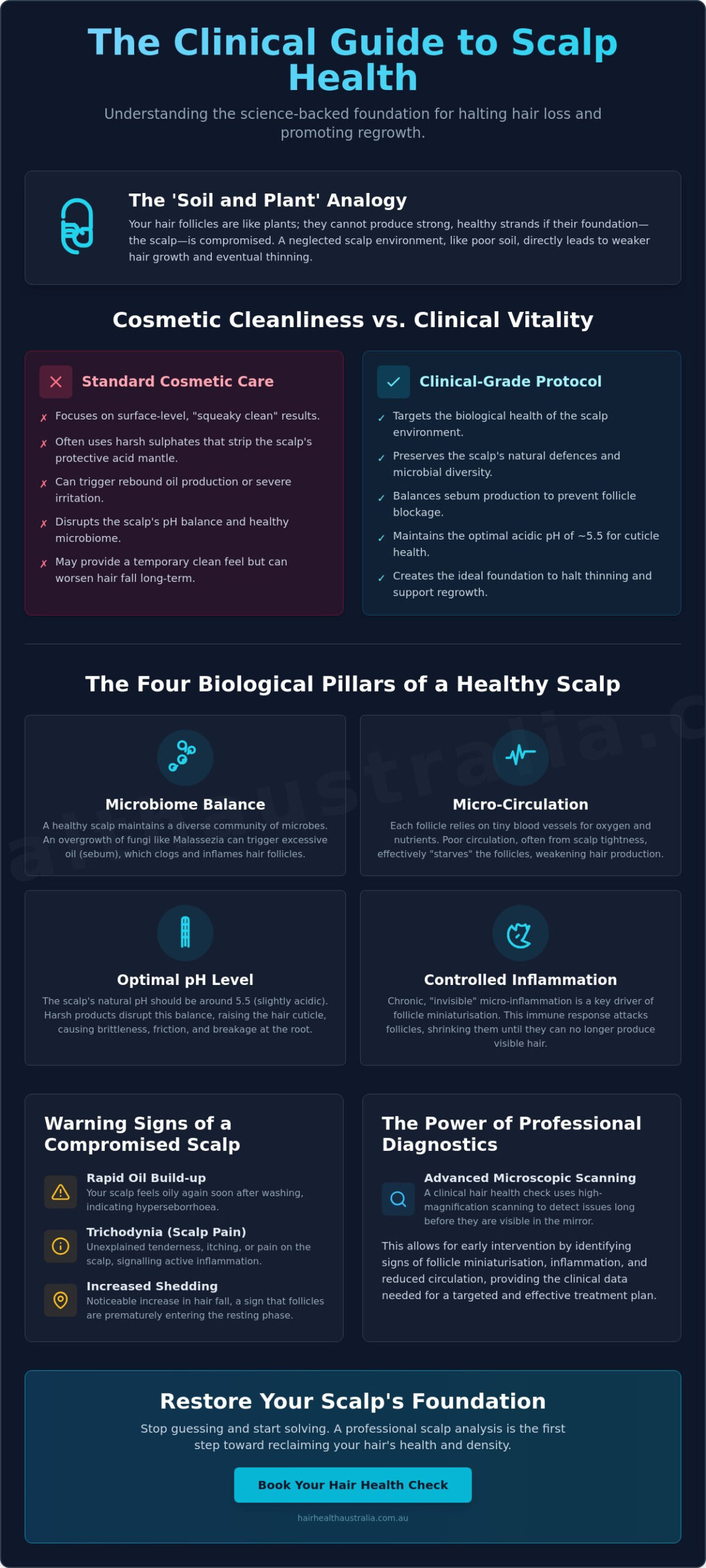
Scalp health is defined as the optimal physiological state of the skin on your head, where the microbiome, pH levels, and blood circulation work in harmony. It is helpful to view your scalp through the “soil and plant” analogy. Just as a plant cannot thrive in parched, toxic, or nutrient-depleted soil, your hair follicles cannot produce strong strands if the skin they inhabit is compromised. Prioritising scalp health for hair loss prevention is about ensuring this biological foundation remains stable. If the environment is neglected, even the most expensive topical treatments will struggle to yield results. To understand the current state of your “soil,” a professional hair health check can provide the necessary clinical data.
The scalp is effectively an extension of your facial skin, yet it often receives significantly less care. While many people follow rigorous multi-step routines for their face, the scalp is frequently subjected to harsh surfactants and environmental pollutants without a second thought. This neglect directly impacts hair shaft integrity. When the scalp’s natural pH balance, which should sit around 5.5, is disrupted, the hair cuticle can become raised and brittle. This leads to increased friction, breakage, and a noticeable loss of lustre that begins at the very root of the hair.
The Causal Link Between Scalp Health and Hair Loss
Chronic scalp issues, such as prolonged inflammation or poor localised blood flow, can disrupt the delicate hair growth cycle. These stressors often force follicles out of the Anagen (growth) phase and prematurely into the Telogen (resting) phase. This shift leads to Telogen Effluvium, a condition characterised by excessive, diffuse shedding. In more complex scenarios, such as Alopecia Areata, the body’s immune system attacks the follicles, further proving how sensitive hair is to its immediate environment. The follicular environment is the primary driver of hair quality and longevity.
Cosmetic Cleanliness vs. Clinical Vitality
There is a significant difference between “squeaky clean” hair and a biologically balanced scalp. Many commercial products focus on cosmetic results, using aggressive sulphates that strip away the acid mantle. This thin, protective film is vital for shielding follicles from pathogens and maintaining a healthy microbiome. Over-cleansing with these harsh chemicals can trigger a rebound effect, causing the scalp to produce excess oil or become severely irritated, both of which can increase hair fall. Truly understanding scalp health for hair loss means looking beyond surface-level cleanliness and focusing on the preservation of the skin’s natural defences and its microbial diversity.
The Biological Pillars of a Healthy Scalp: More Than Just Clean Hair
The biological foundation of a healthy scalp rests on four primary pillars that dictate the longevity of your hair. First is the scalp microbiome, a complex community of bacteria and fungi. One specific fungus, Malassezia, is a natural inhabitant but can cause significant issues when it over-proliferates. When this balance shifts, it often triggers hyperseborrhoea, or excessive oil production. This isn’t merely a cosmetic nuisance; excessive sebum can physically “choke” the hair follicle, creating an anaerobic environment that invites further inflammation. Maintaining Scalp Care for Hair Loss is as much about managing these microscopic residents as it is about standard cleansing.
Second is micro-circulation. Every hair follicle is connected to a tiny blood vessel at the dermal papilla, which delivers oxygen and essential nutrients. In cases of Androgenetic Alopecia, we often see a measurable reduction in scalp skin thickness and elasticity. This “tightening” of the skin can further constrict these vessels, effectively starving the follicle. If you’ve noticed changes in your hair texture or density, a clinical hair health check can identify if these biological pillars are failing before the damage becomes permanent.
Micro-inflammation and Follicle Miniaturisation
Many patients are surprised to learn that inflammation can be entirely “invisible.” You don’t always need obvious redness or itching to have an active immune response attacking your follicles. This chronic micro-inflammation leads to miniaturisation, a process where the follicle gradually shrinks and produces weaker hair. Over several growth cycles, the strands become thinner and shorter until the follicle eventually loses the capacity to break the skin’s surface. Identifying this early is vital for successful intervention. If you are looking for evidence-based strategies on how to improve hair density before miniaturisation becomes irreversible, a structured clinical checklist can help you take targeted action at each stage.
The Role of the Scalp Barrier
A robust scalp barrier acts as a shield against environmental toxins and pollutants. When this barrier is compromised, these irritants can penetrate deeper, reaching the follicle and triggering further shedding. Maintaining elasticity is also vital for long-term hair retention. A supple scalp supports better blood flow to the crown, which is often the first area to show signs of thinning. Ensuring your scalp health for hair loss is managed involves protecting this barrier from harsh chemicals and external stressors that accelerate the ageing of the skin.
Identifying the Warning Signs: When Scalp Issues Signal Progressing Hair Loss
Recognising the transition from a healthy environment to a dysfunctional one is vital for early intervention. One of the most common early indicators of an underlying issue is excessive oiliness that occurs within 24 hours of washing. This state, known as hyperseborrhoea, is often a clinical sign of hormonal imbalances, particularly an oversensitivity to androgens. When oil builds up this rapidly, it doesn’t just affect your hairstyle; it creates a heavy, occlusive layer that can exacerbate scalp health for hair loss by trapping bacteria and inflammatory markers near the follicle opening.
Another significant yet frequently misunderstood symptom is trichodynia, which patients often describe as a “burning” or “tingling” sensation in the scalp. This tenderness is not just a surface-level irritation; it’s often a neurological response to active micro-inflammation surrounding the hair bulb. If you find that simply moving your hair or wearing a hat causes discomfort, it’s a strong signal that your body is in an active shedding phase. Ignoring this “hair pain” allows the inflammatory process to continue unchecked, potentially leading to faster thinning. If you are questioning why your hair loss is accelerating despite making lifestyle changes, understanding the biological and environmental triggers behind your specific pattern is an essential next step.
We also distinguish between the types of flaking present on the scalp. Dry, white flakes are usually a sign of simple dehydration or a reaction to harsh weather. However, sticky, yellow flakes that adhere to the scalp and hair shafts indicate a more complex issue. This is often a sign of Malassezia overgrowth, which contributes to a physical barrier that prevents topical treatments from reaching the dermal papilla. If you notice your scalp has a “shiny” appearance in thinning areas, this is a critical warning sign. A shiny scalp suggests that the follicle openings have closed over with microscopic scar tissue, or fibrosis, meaning the window for successful regrowth is rapidly closing.
Common Conditions That Mimic or Exacerbate Hair Loss
Clinical conditions like Seborrheic Dermatitis go beyond standard dandruff by creating a thick, inflammatory crust that physically hinders hair growth. Scalp Psoriasis, while different, presents as silvery, raised plaques that can lead to temporary thinning due to the sheer intensity of the skin’s turnover. More concerning is Folliculitis, where the follicles become infected and inflamed. If left untreated, these infections can cause permanent scarring alopecia, where the hair follicle is destroyed and replaced by connective tissue.
The Danger of Ignoring ‘Minor’ Irritation
It’s easy to dismiss a persistent itch, but scratching causes significant physical trauma to the hair root. This creates a vicious cycle: the itch leads to scratching, which causes more inflammation, which then triggers further follicle death. Many people attempt to self-treat these issues with supermarket shampoos that contain harsh fragrances or stripping agents, often making the problem worse. If your scalp issues persist for more than two weeks, it’s time to move beyond the bathroom mirror and seek a professional hair health check to accurately diagnose the root cause before permanent damage occurs.
A Clinical Approach to Scalp Maintenance: Practical Steps for Regrowth
Optimising your scalp health for hair loss requires a transition from generic hair care to a systematic, clinical routine. The first step involves using a pH-balanced, sulphate-free cleanser tailored to your specific skin type. This ensures the acid mantle remains intact while removing excess sebum. Second, incorporate daily scalp stimulation to boost micro-circulation, ensuring the dermal papilla receives the oxygen it needs to function. Third, manage environmental stressors by protecting thinning areas from UV damage. Fourth, replace standard conditioners with targeted clinical topicals that regulate the microbiome and suppress inflammatory markers. Finally, monitor your progress through professional check-ups to adjust your protocol as your scalp environment improves.
The Sydney Factor: Protecting Your Scalp from the Australian Sun
Living in Sydney presents unique environmental challenges that can accelerate hair thinning. Our high UV index doesn’t just burn the skin; it penetrates the scalp to break down collagen and elastin. This degradation of the dermal matrix, known as solar elastosis, weakens the structural support for your follicles. Practical protection is essential. While hats provide the most reliable shield, you can also use non-comedogenic UV sprays that won’t clog your pores. Additionally, Sydney’s coastal humidity often creates a “greenhouse effect” on the scalp. This warmth and moisture can trigger a rapid overgrowth of fungi and increase the rate of sebum oxidation, leading to the “sticky” flaking discussed previously.
Daily Habits vs. Weekly Treatments
The debate over how often to wash your hair depends entirely on your individual sebum production. If you have hyperseborrhoea, daily washing with clinical-grade products is often necessary to prevent follicle “choking.” Conversely, those with drier scalps may find three times a week sufficient. Weekly scalp exfoliation is also beneficial, but you should favour chemical exfoliants like salicylic acid over physical scrubs, which can cause micro-tears in the skin. Your internal biology also plays a role. Ensuring your diet includes adequate Zinc, Biotin, and Omega-3 fatty acids provides the essential building blocks for healthy scalp tissue. If you’re unsure which habits will best support your recovery, you can book a hair health check for a tailored clinical roadmap. Pairing this with a structured plan on how to improve hair density through the latest non-surgical protocols can help you build a comprehensive, evidence-based strategy for thicker, healthier hair.
Beyond Home Care: Professional Scalp Diagnostics at Our Sydney Clinic
While checking your hair in the bathroom mirror is a natural first response to thinning, it is fundamentally insufficient for a clinical diagnosis. By the time you notice a change in your reflection, you may have already lost up to 50% of your hair density in that specific area. Professional diagnostics move beyond surface-level observations to examine the micro-environment where follicles actually live. At our Sydney clinic, we use advanced microscopic scanning to identify follicle miniaturisation long before it becomes visible to you or those around you. This proactive approach is the cornerstone of managing scalp health for hair loss effectively.
Hair Health Australia focuses on developing personalised, non-surgical regrowth programs for both men and women. We don’t just look at the hair you’re losing; we look at the skin you’re keeping. By transitioning from simply managing symptoms like itchiness or oil to restoring actual density through clinical intervention, we provide a path toward long-term recovery. Our process is methodical and evidence-based, ensuring that every recommendation is backed by the specific biological needs of your follicular environment. This high level of precision allows us to move away from “one-size-fits-all” supermarket solutions and toward systematic, results-driven care.
What to Expect During a Clinical Hair Health Check
During a Hair Health Check, we perform a high-magnification analysis of your scalp using specialised diagnostic tools. This allows us to measure specific data points such as follicle density per square centimetre and scalp hydration levels. We also assess the presence of any perifollicular inflammation or sebum blockages that may be hindering growth cycles. This objective data replaces guesswork with a clear biological profile, allowing us to track your progress with mathematical precision as your scalp environment improves.
Non-Surgical Solutions for Long-Term Vitality
Our non-surgical solutions, including clinical laser therapy and PRP, are integrated into a scalp-first approach to hair restoration. These treatments are evidence-based and designed to be non-invasive, focusing on revitalising the dermal environment we’ve discussed throughout this guide. We are committed to providing realistic expectations and systematic care that aligns with modern clinical standards. Taking the first step involves moving away from experimental home care and consulting a specialist who can provide a verified path to hair retention and improved scalp health for hair loss.
Take the First Step Toward Clinical Scalp Restoration
Understanding that your scalp is the biological foundation for every strand you grow changes how you approach hair care. We’ve explored how managing the “soil” of your follicles through sebum regulation and microbiome balance is the only way to halt thinning effectively. Symptoms like persistent oiliness or scalp tenderness are not just minor irritations. They’re critical biomarkers. These signs require professional attention before miniaturisation becomes permanent.
Prioritising your scalp health for hair loss is a clinical necessity for long-term retention. The science is clear. With over 15 years of clinical experience in Sydney, our team utilises advanced microscopic diagnostic technology to identify issues the naked eye cannot see. We specialise in non-surgical regrowth programs tailored to your unique biological profile, moving beyond the guesswork of over-the-counter products.
Don’t wait for visible thinning to dictate your next move. Book Your Comprehensive Hair Health Check in Sydney Today and gain the clarity you need to protect your hair. You can restore your scalp’s vitality and reclaim your confidence through proven, evidence-based care.
Frequently Asked Questions
Can an unhealthy scalp actually cause permanent hair loss?
Yes, untreated scalp conditions can eventually lead to permanent hair loss through a process called scarring alopecia. Chronic inflammation causes the hair follicle to be replaced by connective tissue, which effectively closes the follicle opening and makes regrowth impossible. This is why addressing persistent irritation or redness early is essential to prevent an irreversible transition from thinning to permanent loss.
How often should I wash my hair if I am worried about thinning?
You should wash your hair as often as your specific sebum levels dictate, which for many Australians is daily or every second day. Allowing excess oil to accumulate can “choke” the follicle and exacerbate scalp health for hair loss by trapping inflammatory markers. Using a pH-balanced, clinical cleanser ensures you remove debris without stripping the scalp’s protective acid mantle.
Does dandruff always lead to hair loss?
Dandruff itself does not cause hair loss, but the underlying inflammation and the physical trauma from scratching certainly can. Persistent flaking often signals a microbiome imbalance that, if left unmanaged, disrupts the normal hair growth cycle. Resolving the inflammation through targeted clinical care is key to maintaining hair density and preventing the premature shedding associated with an itchy scalp.
Can scalp massages really help with hair regrowth?
Scalp massages can support regrowth by improving localised micro-circulation and delivering more oxygenated blood to the dermal papilla. While massage alone won’t cure genetic thinning, it helps maintain the elasticity of the scalp tissue and reduces “tightness” in the crown area. This mechanical stimulation is a useful supplementary habit when combined with a broader, evidence-based clinical treatment plan.
What are the best ingredients to look for in a scalp-healthy shampoo?
Look for clinical ingredients such as Salicylic acid for gentle exfoliation and Zinc pyrithione or Ketoconazole for microbiome balance. These components help maintain the scalp’s natural pH while effectively managing fungal overgrowth. It’s best to avoid products with heavy silicones or synthetic fragrances, as these can leave a residue that interferes with the skin’s natural respiratory functions.
Is it possible to have an oily scalp but dry hair, and how do I treat it?
It’s quite common to experience an oily scalp alongside dry hair shafts, often caused by an overproduction of sebum that doesn’t travel effectively down the hair. You should treat the scalp with a clarifying, clinical cleanser while applying a rich conditioner only to the mid-lengths and ends. This dual approach ensures the follicles remain clear and unobstructed without dehydrating the rest of your hair fibre.
When should I see a hair loss specialist instead of a regular hairdresser?
You should consult a specialist when you notice a visible reduction in density, persistent scalp pain, or irritation that lasts longer than two weeks. While hairdressers are experts in aesthetics and styling, a specialist uses diagnostic tools like microscopic scanning to identify the biological causes of thinning. Early clinical diagnosis is the most effective way to stop the progression of hair loss before it becomes visible.
Does the Australian climate make scalp issues worse for hair loss?
The Australian climate, particularly the high UV index and coastal humidity, can significantly exacerbate scalp health for hair loss. Intense sun exposure breaks down collagen in the scalp skin, while humidity encourages the overgrowth of fungi like Malassezia. Protecting your scalp with hats and using moisture-regulating clinical products is essential for maintaining a stable follicular environment in these harsh conditions.