
A receding hairline doesn’t automatically mean surgery is the only option. Non-surgical receding hairline treatment in Sydney can include a tailored hair-loss plan, lifestyle changes, prescription finasteride or hairline feathering. Feathering uses realistic hair-like pigment strokes to change the appearance of the hairline, while finasteride is a prescription-only DHT blocker used for hair loss.
It’s understandable to want a clear idea of what may help before choosing a treatment. The right approach depends on factors such as your hair-loss pattern, health and preferences, so options and expectations vary from person to person.
This article explains how non-surgical treatments work, how a plan can be tailored, and where lifestyle changes and prescription finasteride may fit. It also covers what to consider when comparing appearance-focused options with approaches intended to treat hair loss.
Key Takeaways
- Compare appearance-focused options with treatments aimed at addressing hair loss to identify which approach matches your priorities.
- Hair-loss patterns, shedding and scalp changes can help guide a personalised treatment plan.
- Review nutrition and lifestyle habits as part of a broader approach, rather than assuming one change will address every cause.
- Finasteride is a prescription-only option; understand its role as a DHT blocker when considering treatment.
- Explore a dedicated hair-loss treatment plan if changes to your hairline or density are affecting your confidence.
Non-surgical hair loss treatment options in Sydney
Sydney clinics may offer medical assessments, hair-loss programs, prescription options, PRP injections, laser therapy or appearance-focused treatments. Compare what each approach aims to address. For a receding hairline, consider the pattern, whether density or appearance is your priority, and how progress will be reviewed.
Pattern Hair Loss in Men and Women
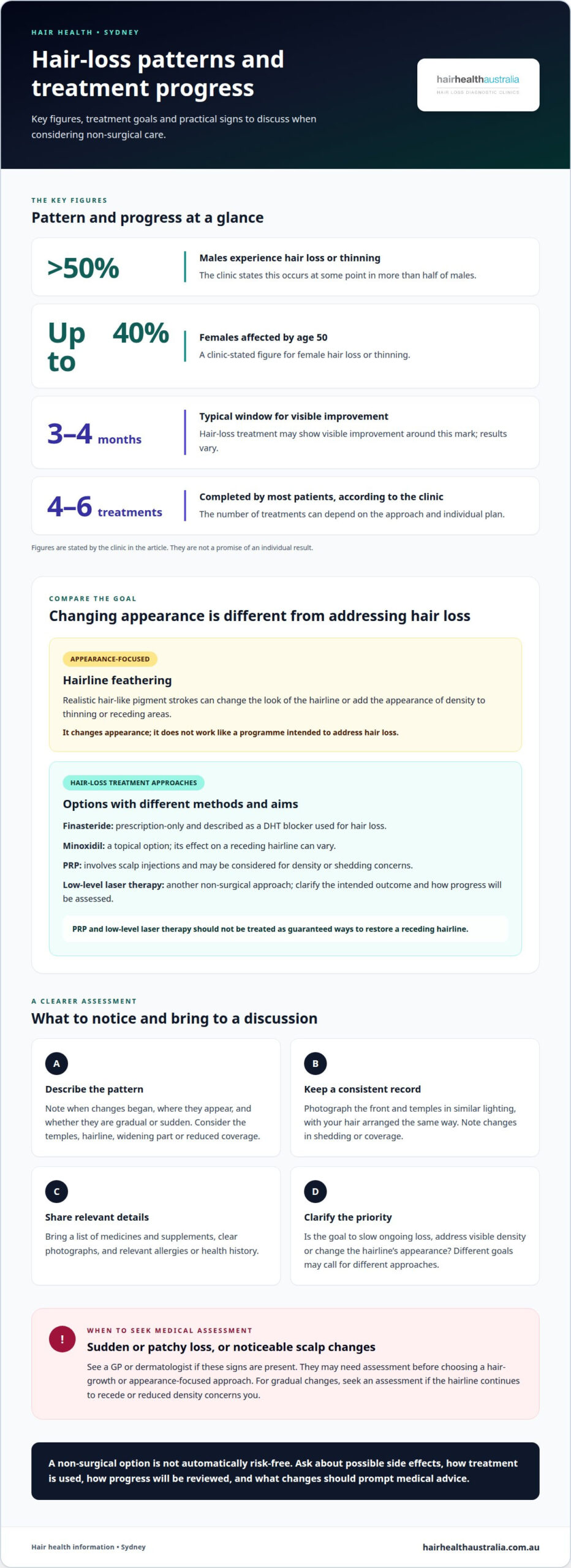
Male and female pattern hair loss can affect the hairline and density differently. The clinic states that more than 50 per cent of males experience hair loss or thinning at some point, while up to 40 per cent of females are affected by age 50. Look at where thinning occurs and whether it is gradual or sudden. These details help frame a medical assessment and guide which treatment options are relevant.
A receding front hairline may be one person’s main concern; another may be more concerned about a widening part or reduced coverage. Track changing areas with photographs taken in similar lighting. This gives you a clearer basis for discussing the pattern than relying on a single observation.
Non-surgical Hair Growth Programs
A non-surgical hair-growth program can bring assessment, treatment choices and progress reviews into a planned process. Steps may include identifying the area of concern, discussing suitability and deciding how to monitor changes. Clarify whether the program targets ongoing hair loss, visible density or the appearance of the hairline.
Hairline feathering is appearance-focused. Pigment is applied in realistic hair-like strokes to change the look of the hairline or add the appearance of density to thinning or receding areas. It doesn’t work like a program intended to address hair loss, so keep that distinction clear when comparing options.
Minoxidil for a Receding Hairline
Minoxidil is a topical option used in hair-loss treatment. It may help some people manage hair loss, but the effect on a receding hairline can vary. Suitability, the area being treated and consistent use all matter when considering its role.
There’s no single timeframe that applies to everyone. Hair growth changes gradually, so progress is assessed over time rather than by day-to-day appearance. A medical discussion can cover how to use an option, what changes to monitor and whether it fits your overall plan.
PRP and Low-level Laser Therapy
PRP hair treatment involves scalp injections and may be considered for concerns about density or shedding. Low-level laser therapy is another non-surgical approach. Neither should be treated as a guaranteed way to restore a receding hairline. Clarify the intended outcome and how progress will be assessed.
Realistic results vary by treatment and starting pattern. Hair-loss treatment typically shows visible improvement around the 3-4 month mark, and the clinic says most patients complete 4-6 treatments. Appearance-focused feathering can improve how the hairline looks, while a growth program addresses a different goal.
Treatment suitability and personalised planning
A suitable plan matches the treatment goal to the hair-loss pattern. At a clinic assessment, describe when the changes began, where they appear and what you’ve tried.
Bring a list of medicines and supplements, along with clear photographs of your hairline or thinning area. These details help you discuss relevant options, monitoring and practical considerations such as treatment routines.
Treatment Side Effects and Risks
Risks depend on the method, so review the safety information for each option before starting. Topical minoxidil, scalp injections such as PRP, and low-level laser therapy, for example, involve different methods of use.
Ask about possible side effects, how to use or receive the treatment, and what changes should prompt medical advice. Share relevant medicines, allergies and health history with the treating professional. A non-surgical option isn’t automatically risk-free just because it doesn’t involve an operation.
GP or Dermatologist Assessment
See a GP or dermatologist if hair loss is sudden or patchy, or comes with noticeable scalp changes. These signs may need medical assessment before you choose a hair-growth or appearance-focused approach.
For gradual changes, arrange an assessment if your hairline continues to recede or reduced density concerns you. Note when you first noticed the change and whether it affects one area or several. A medical professional can assess the pattern and consider whether further investigation is appropriate.
Personalised planning should clarify the goal before treatment begins. Is your priority slowing ongoing loss, addressing visible density or changing the hairline’s appearance? These goals may call for different approaches, so compare the intended outcome rather than the treatment name alone.
Keep a consistent record to make follow-up discussions more useful. Photograph the front and temples in similar lighting, with your hair arranged the same way. Note changes in shedding or coverage and when they occur. This gives the clinic a practical basis for reviewing progress, rather than relying on memory.
Ask how the plan will be reviewed and what happens if the approach doesn’t suit your routine. Discuss application or appointment requirements, monitoring, and how treatment fits with existing medicines. For a receding hairline treatment non-surgical in Sydney, a hair health assessment can help organise those questions around your concerns.
Early thinning, shedding and reduced density
Compare photographs taken over time to see whether your hairline is changing, rather than judging from a single image. A consistent shift at the temples or reduced coverage elsewhere is a trend to discuss during a consultation, not a diagnosis on its own.
Check the same areas in similar lighting, with your hair arranged consistently. Look at the temples, front hairline, part and crown instead of relying on one mirror view. Note whether the outline looks different in older photos or the scalp appears more visible through your hair. These observations can help distinguish a lasting change from day-to-day differences in styling or lighting.
Shedding and thinning are different observations. Shedding describes hair coming away; thinning describes reduced coverage or finer-looking areas. Record what you notice, where it occurs and whether it continues. Alopecia affects around one in five Australians, so persistent changes are a reasonable reason to seek an assessment.
A simple record can make a consultation more focused. Use these steps to document changes without trying to diagnose the cause yourself:
- Take front, temple and crown photographs in consistent lighting.
- Write down when you first noticed shedding or reduced density.
- Note whether changes involve one area or several, such as temples and crown.
- Record recent changes to your routine, medicines or supplements for discussion.
Compare each new photograph with the earlier image, not with a different angle or hairstyle. A shorter haircut, wet hair or bright overhead lighting can make the scalp easier to see. Keep photo conditions similar so you can compare changes in coverage more clearly. If the pattern is difficult to judge, bring the images to a GP or hair-loss consultation.
During a consultation, describe the pattern plainly: “the temples look further back” or “the part appears wider”. Mention whether shedding began suddenly or gradually, and whether you’ve noticed changes beyond the hairline. These details help a professional assess what you’re seeing and decide whether medical review is appropriate.
Hairline changes can be difficult to track because they happen gradually. Dated photographs give you a practical reference, while notes about shedding add context. If you’re concerned about continuing thinning, worsening coverage or a change that feels unusual for you, arrange an assessment rather than relying on photographs alone.
Nutritional and lifestyle interventions
Food choices and daily routines can support general health, but they don’t identify the cause of hair loss. Treat nutrition as one part of the picture, not a stand-alone treatment for a receding hairline or a substitute for medical assessment.
Start with a practical review of your usual eating pattern. Note skipped meals, restrictive eating, recent diet changes and foods you regularly avoid. Record what you eat across a typical day before changing your routine. This gives a GP or dietitian useful context if you’re concerned about thinning or shedding.
A balanced approach is more useful than trying unverified remedies. Avoid starting several supplements at once, as this makes it harder to understand what has changed. Supplements may also be unsuitable for some people or interact with medicines. Discuss them with a health professional, especially if you take regular medication or have an existing condition.
Consider these steps before making changes:
- Write down recent changes to your meals, appetite or eating routine.
- List supplements and medicines, including when you began taking them.
- Note lifestyle changes that coincide with shedding, such as a new routine or increased demands.
- Discuss persistent changes with a GP before restricting foods or adding supplements.
Stressful periods, disrupted routines or major life changes are worth mentioning during an assessment. That context doesn’t prove what caused the hair loss, but it helps the professional consider the full picture alongside the pattern, timing and areas affected.
Hair-care habits are also worth reviewing. Notice whether repeated tight hairstyles, frequent heat styling or harsh handling put tension on particular areas. If you regularly pull your hair back tightly, try a looser style and observe whether it reduces tension. A change in styling doesn’t replace investigating ongoing thinning.
Keep any changes simple and trackable. If you change your eating pattern, supplement use or hair routine, record what changed and when. Avoid making several changes at once, as it can be difficult to tell what affected your routine or scalp. Bring your notes to a consultation if shedding continues or density changes.
The key distinction is between supporting wellbeing and treating an underlying condition. A varied diet and manageable routine can support general health, but they can’t confirm why your hairline is changing. A GP can assess persistent concerns, while a treatment discussion can consider options suited to your pattern and priorities.
Prescription finasteride
Finasteride is a prescription-only medication used as a DHT blocker for hair loss. Its role differs from hairline feathering, which changes the hairline’s appearance. Before considering finasteride, clarify whether your goal is managing ongoing hair loss, improving visible density or changing how your hairline looks.
A discussion with a prescriber should start with your hair-loss pattern and relevant health information. Describe when you noticed changes, which areas are affected and whether shedding has continued. Share your current medicines and supplements, previous treatments and any health concerns. This helps the prescriber assess whether finasteride is appropriate to discuss for your circumstances.
Ask the prescriber to explain possible side effects and risks, and what to do if you notice a change after starting. Discuss how the medication fits with your health history and other medicines. Don’t use someone else’s prescription or change a prescribed plan without speaking with the prescriber. Clear instructions matter before treatment begins.
Set expectations for review before making a decision. Ask how progress will be assessed, what changes to monitor and when to arrange follow-up. Hair changes can be difficult to judge from memory, so keep dated photographs in consistent lighting. Record changes in shedding or coverage and bring those notes to your next appointment.
Use the appointment to establish whether the option matches your priorities. Consider these practical questions:
- What pattern of hair loss is being addressed?
- What benefits and possible side effects should I understand?
- How should I take the medication, and what should I do if I miss a dose?
- What changes should I record before the next review?
- How will the plan be reassessed if my hair or health changes?
Finasteride isn’t an appearance treatment that immediately redraws a hairline. It’s a medical option for hair loss, so deciding whether to use it involves discussing its purpose, instructions and potential risks with a prescriber. Depending on your goal and assessment, a plan may also consider other non-surgical approaches.
If you’re weighing finasteride against other options, organise a hair health check to discuss your concerns and treatment priorities.
Hair Health Australia: Male Hair Loss Treatment
Hair Health Australia provides Male Hair Loss Treatment through non-surgical regrowth programs for thinning hair and pattern baldness. If you’re noticing changes around your temples, hairline or crown, a tailored plan can help you explore options suited to your concerns and goals.
The next step is to discuss the hair-loss pattern you’ve noticed and what you hope to address. Hair Health Australia also provides Female Hair Loss Treatment for women experiencing thinning or hair loss. These services focus on treatment, not hair transplantation or hairdressing.
For a considered next step, contact Hair Health Australia to discuss your hair-loss concerns and treatment options.
Choose a next step that fits your priorities
Before choosing a non-surgical receding hairline treatment in Sydney, decide what you want help with: managing ongoing changes, improving the appearance of density or understanding your options. This priority gives you a practical starting point for discussion without assuming one approach suits every hair-loss pattern.
Bring a brief record of what you’ve noticed, when it began and what matters most to you. If prescription medication comes up, ask about suitability, possible risks and how progress will be reviewed. The aim is to understand why each part of a proposed plan is being considered and how it relates to your concerns.
It can help to define what progress would look like in everyday terms. You may want clearer information about your hairline, a plan you can follow consistently or guidance on what to monitor. These priorities make it easier to have a focused conversation and choose a next step at your own pace.
Arrange a Hair Health Check to discuss your concerns and take an informed step forward.
Frequently Asked Questions
What causes a receding hairline in men and women?
A receding hairline can be associated with hereditary pattern hair loss, but other factors may contribute. Stress, medicines, hormonal imbalance and nutrient deficiency are also possible causes of hair loss. The pattern alone doesn’t establish the cause. Note whether changes are gradual or sudden, and whether thinning is limited to the hairline or affects other areas. This context can help guide an assessment.
Which non-surgical treatments can help a receding hairline?
Options discussed for hair loss include minoxidil, prescription finasteride, PRP, low-level laser therapy and hairline feathering. They have different aims: some are considered for hair loss, while feathering changes the hairline’s appearance. Before choosing, identify whether your main concern is ongoing change, density or appearance. A plan can then be discussed in light of that priority, the affected area and your health history.
Does finasteride help a receding hairline, and what are its risks?
Finasteride is a prescription-only DHT blocker used for hair loss, and a prescriber can assess whether it suits your situation. Discuss potential benefits and risks before starting, taking your health history and other medicines into account. Ask what side effects to watch for, what to do if they occur and how progress will be reviewed. Don’t use another person’s prescription or change your plan without medical advice.
Are hair loss medicines available by prescription in Australia, and what are the rules?
Finasteride is prescription-only in Australia, so it requires a prescription rather than being an over-the-counter option. Discuss its suitability and use with the prescriber, including possible risks and follow-up. Supply requirements depend on the specific medicine, so don’t assume every hair-loss product has the same rules. Speak with a health professional before starting or purchasing medication.
Which Sydney clinics offer non-surgical hair loss treatment, and how do their services compare?
Sydney clinics may offer medical assessments, hair-loss programs, prescription options, PRP injections, laser therapy and appearance-focused hairline feathering. Compare whether each option aims to address ongoing hair loss, visible density or the hairline’s appearance, and ask how progress will be reviewed.