
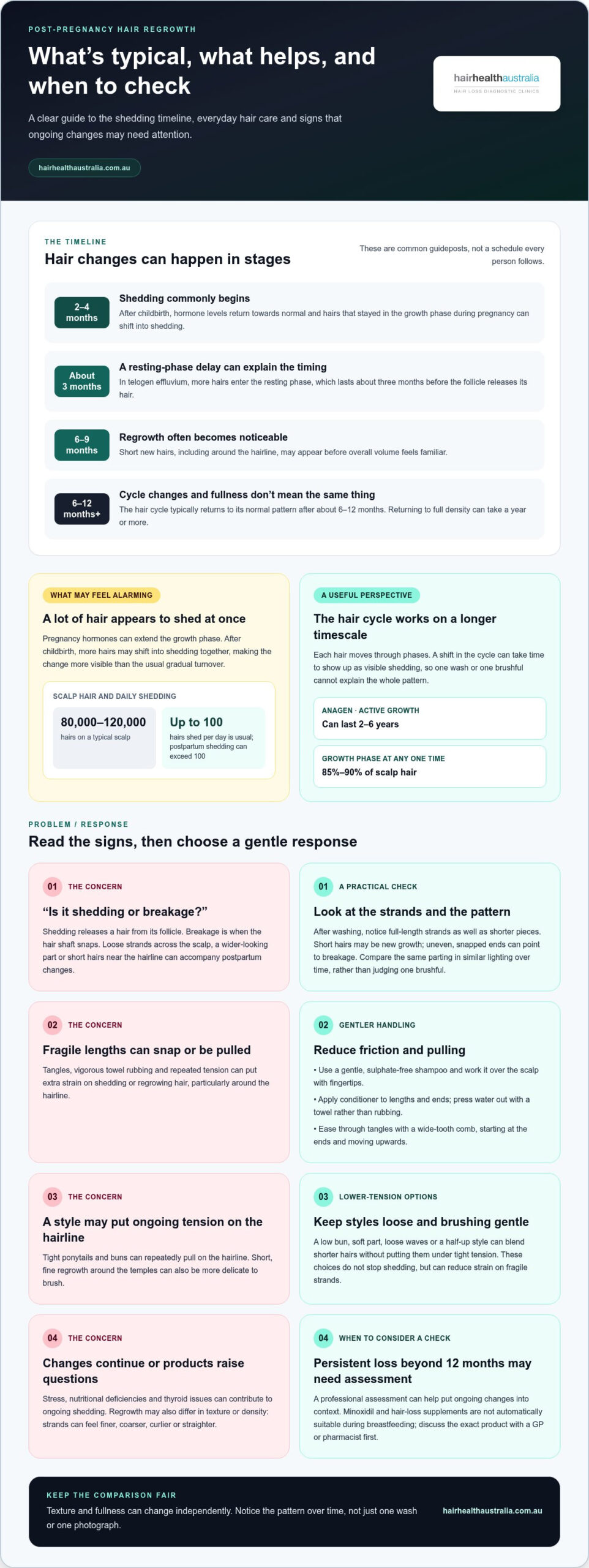
Postpartum hair shedding commonly begins 2 to 4 months after giving birth, as hormone levels return to normal and hairs that stayed in the growth phase during pregnancy begin to shed. Regrowth often becomes noticeable around six to nine months after childbirth, but returning to full density can take a year or more. Understanding this post-pregnancy hair regrowth journey can help you recognise what’s typical and when ongoing changes may need attention.
Seeing more hair in your brush or shower can be unsettling, especially as you adjust to life with a new baby. This guide to the post-pregnancy hair regrowth journey explains why shedding happens, how hormones and other factors can affect it, and what to expect as your hair regrows.
You’ll learn how the hair growth cycle affects timing, why texture or density may change, and which signs make further assessment worth considering. The aim is to give you a clear, realistic picture of regrowth, without suggesting everyone’s hair follows the same pattern.
Key Takeaways
- Postpartum shedding commonly starts 2 to 4 months after giving birth as changes in hormone levels shift hairs into the shedding phase.
- Hair regrowth often becomes noticeable around six to nine months after childbirth, while a return to full density can take a year or more.
- Gentle hair care and less tension around the hairline can help reduce breakage while new growth is more fragile.
- Stress, nutritional deficiencies and thyroid issues can contribute to ongoing shedding, so the cause matters when changes persist.
- Hair may grow back with a different texture or density, and persistent loss beyond 12 months may need professional assessment.
What is postpartum hair loss?
Postpartum hair loss is increased shedding after childbirth, often linked to changes in the hair growth cycle. A typical scalp has between 80,000 and 120,000 hairs, and shedding up to 100 hairs per day is usual. During postpartum shedding, daily hair loss can exceed 100 hairs. The extra strands can look alarming in a brush or shower, but shedding and breakage are different: shedding releases hairs from their follicles, while breakage snaps the hair shaft.
Notice where the change appears. A wider-looking part, loose strands across the scalp or short hairs near the hairline can accompany postpartum changes. Short hairs may be new growth, while uneven, snapped ends can point to breakage. After washing, look for full-length strands as well as shorter pieces, rather than judging by the amount in one brushful.
Minoxidil and hair-loss supplements aren’t automatically suitable during breastfeeding. Safety depends on the ingredient and individual circumstances, so discuss the exact product with your GP or pharmacist before using it.
Gentle handling can limit avoidable breakage while hair is shedding or regrowing. Choose a gentle, sulphate-free shampoo and conditioner, with a shampoo suited to your scalp type. Work shampoo over the scalp with your fingertips instead of rubbing the lengths together. Apply conditioner to the lengths and ends, where tangles can make brushing more damaging.
After washing, press water out with a towel rather than rubbing vigorously. Ease through tangles with a wide-tooth comb, starting at the ends and moving upwards. If a knot resists, hold the hair above it and loosen it gradually. This reduces pulling at the roots and snapping fragile lengths, particularly around the hairline.
- Choose loose styles, such as a low bun, soft part, loose waves or a half-up style.
- Avoid tight ponytails and buns that pull repeatedly on the hairline.
- Brush gently, especially around short, fine regrowth hairs at the temples.
- Use a scalp massage with coconut or argan oil if it suits your scalp, applying light pressure with your fingertips.
Scalp care doesn’t require vigorous scrubbing. Massage gently with your fingertips while shampooing to cleanse without rough friction. Rinse thoroughly, and wash when your scalp feels oily or has product build-up. There’s no single schedule for everyone: scalp type, styling products and comfort can guide your routine.
Loose styling can make short regrowth less noticeable without putting it under tension. A soft part or loose waves, for example, can blend shorter hairs with longer lengths. These choices won’t stop postpartum shedding, but can reduce strain and protect fragile strands as they regrow.
Hormonal changes and the hair growth cycle
Pregnancy hormones can change how long hairs remain in their growth phase. After childbirth, hormone levels return towards normal, and more hairs may shed together.
Pregnancy and Postpartum Hormone Changes
During pregnancy, higher oestrogen levels extend the hair growth cycle, which can make hair appear longer and thicker. After childbirth, hormone levels return to normal, and hairs that remained in the growing phase can shift into shedding. Postpartum hair loss often reflects a change in timing across the scalp, rather than every follicle stopping growth at once.
Each hair moves through phases, including anagen, the active growth phase, and telogen, the resting phase. Anagen can last two to six years, and 85% to 90% of scalp hair is in this phase at any given time. When a larger group of hairs shifts out of growth after pregnancy, shedding becomes more visible than the usual gradual turnover.
Similar hormonal changes can follow fertility treatment, miscarriage or stillbirth. The hair cycle responds to shifts in the body, not only to giving birth. This explains why postpartum-type shedding may happen after different reproductive experiences. Because the hair cycle responds over time, shedding may become noticeable after the hormonal shift rather than straight away.
Changes in Hair Texture and Density
Regrown hair may not match your pre-pregnancy hair exactly in texture or density. New strands can feel finer, coarser, curlier or straighter, while reduced density can make the part look wider. When comparing regrowth with old photos, remember that texture and fullness can change independently. Neither alone shows how the whole cycle is progressing.
Hair typically returns to its normal growth cycle after about 6-12 months, while returning to full density after childbirth can take a year or more. Those timelines describe different things: cycle normalisation does not mean every lost strand has reached its former length or thickness. Short regrowth around the hairline may appear before the overall volume feels familiar.
Look at the pattern over time, not one wash or one photograph. For example, compare the same parting under similar lighting, and note whether short hairs are appearing alongside ongoing shedding. If density changes remain a concern, a hair health check can help put those observations into context.
Postpartum hair loss and telogen effluvium
Postpartum hair loss often follows a delayed cycle, so shedding may begin months after childbirth. Telogen effluvium is the term for a temporary increase in hairs entering the resting and release phases.
How Postpartum Shedding and Regrowth Happen
Telogen effluvium is increased shedding that occurs when more hairs shift into the resting phase. That phase lasts about three months before the follicle releases its hair. This delay helps explain why postpartum hair loss can appear well after childbirth, rather than immediately after delivery.
Once a hair is released, its follicle can begin growing another strand. Shedding and regrowth can therefore overlap: loose hairs fall while new strands emerge. During active postpartum hair loss, daily shedding can exceed 100 hairs. The number in a brush can vary between washes, so one day’s count doesn’t show the whole pattern.
When Postpartum Shedding Starts
Postpartum shedding commonly starts 2 to 4 months after giving birth. This timing follows the hair-cycle delay: a follicle can enter its resting phase before the existing strand is released. The gap between childbirth and visible loss can make the change feel sudden, even though the cycle has been shifting over time.
You may first notice extra strands in the shower or on a pillow several months after delivery. Breastfeeding may be associated with a longer shedding period for some women. The start date alone doesn’t show how long shedding will continue; the pattern over the following months gives more context.
Typical Duration of Postpartum Hair Loss
Postpartum hair loss usually ends about 6-12 months after giving birth. This describes the typical shedding period, not the time needed for every strand to regain its former length. Hair grows back gradually, so reduced fullness can remain noticeable after shedding has eased.
Track the change across months rather than comparing individual wash days. Note whether shedding is easing and whether new short hairs are appearing. If hair loss continues beyond 12 months after childbirth, it may need professional assessment. Persistent or changing loss matters because postpartum shedding is not the only possible explanation for hair changes.
Typical Timing of Postpartum Regrowth
Postpartum regrowth typically becomes noticeable around six to nine months after childbirth. Short new strands may appear along the hairline or part before overall density feels different. The change is gradual, so visible regrowth can begin while some shedding continues.
Returning to fuller-looking hair takes longer than spotting new growth. A person may see short hairs first, then notice more coverage as those strands lengthen. Compare similar areas over time, such as the same parting in consistent lighting. If shedding persists beyond 12 months, professional assessment can help distinguish ongoing postpartum changes from other causes.
Stress, sleep and nutrition as contributing factors
Childbirth can bring physical and emotional stress, along with changes in appetite and sleep. These factors may add to shedding, so consider the pattern when working out what could be contributing.
Stress, Sleep and Hair Health
Physical and emotional stress after childbirth can contribute to postpartum hair loss. Broken sleep may also make recovery feel harder, but sleep disruption alone doesn’t explain why hair is shedding. Consider the wider picture: when shedding began, whether it is continuing, and whether other changes followed childbirth.
Genetics can make some women more prone to pronounced hair changes after pregnancy. Thyroid disease is another possible contributor, particularly when untreated or inadequately treated. Increased shedding can have more than one influence, so treatment depends on the underlying cause rather than assuming every change is due to postpartum hormone shifts.
For example, note whether hair loss began after childbirth and whether it is still changing. Also record relevant health changes, such as a known thyroid condition or a family pattern of hair thinning. These details give a clearer picture of the context and help distinguish a temporary cycle change from other contributing factors.
Dietary Support for Hair Health
Nutritional deficiencies after childbirth can contribute to hair loss, particularly during breastfeeding. Adequate protein supports recovery, while correcting a nutrient deficiency can address a specific shortfall when one is present. Supplements aren’t a substitute for identifying whether a deficiency exists.
If they suit your diet, build meals around a reliable protein source such as eggs, yoghurt, tofu or legumes. A varied eating pattern can support general nutrition, but it doesn’t establish which nutrient, if any, is affecting an individual’s hair. Breastfeeding, appetite changes and dietary restrictions are useful context when considering intake.
If eating has become difficult since childbirth, keep a brief record of food and symptoms. It may reveal patterns such as regularly missed meals or limited protein choices. If a deficiency is suspected, the next step is to identify and correct it, not to take multiple hair supplements without a clear reason.
Reducing Physical Stress on Hair
Minimising physical stress on hair can support postpartum recovery alongside adequate protein and correction of identified deficiencies. Repeated pulling, rough detangling or high-tension styles can add breakage to shedding and make overall fullness look reduced. Nutrition supports the body internally, while gentle handling limits avoidable strain on the hair shaft.
Choose a loose style for daily wear and handle tangles carefully, especially around fragile new growth. If you tie your hair back for feeding or exercise, vary the position and avoid pulling tightly at the same area. These steps won’t stop hormonal shedding, but they can reduce extra mechanical stress while the hair cycle changes.
Consider the whole picture rather than treating every shed strand as a sign of poor nutrition. Stress after childbirth, breastfeeding-related nutritional needs, genetic predisposition and thyroid disease can each influence hair health. Keeping these factors in view helps make the next step more informed and individual.
Hair regrowth and expected fullness
Postpartum hair can take a year or more after childbirth to return to full density. New growth may become noticeable sooner, but short hairs need time to lengthen before overall fullness looks familiar.
Regrowth and density are different measures. Fine hairs along the hairline can signal new growth while the part still looks wider. Active follicles can produce new strands without immediately restoring the coverage you remember from before pregnancy. This difference between visible regrowth and fuller-looking hair is an important part of the post-pregnancy hair regrowth journey.
Hair returning to its normal growth cycle after about 6-12 months doesn’t mean every strand has reached its previous length. Hair texture and density can also differ from your pre-pregnancy baseline. A new strand might feel curlier or finer, for example, so compare overall coverage as well as texture when considering change.
Track changes consistently instead of relying on memory. Take occasional photos using the same parting, lighting and angle, then compare your scalp over time. You can also note short strands along the hairline, whether the part looks wider, and whether shedding is easing. These observations help you follow your post-pregnancy hair regrowth journey without judging progress by one wash or photo.
Fullness can look uneven during regrowth. Short hairs at the temples may stand away from longer strands, while new growth across the crown can be harder to see. Loose styling can blend shorter hairs without pulling them. Don’t judge progress only by ponytail thickness: styling and hair texture also affect how much hair appears gathered.
If reduced density remains a concern, the pattern and duration can help guide your next step. A dermatologist may advise options such as biotin supplements or low-level laser therapy to stimulate hair growth. These aren’t automatic choices for everyone; the reason for ongoing hair changes informs whether a treatment is appropriate.
For a clearer view of persistent thinning or uneven regrowth, book a hair health check. A structured assessment can help put changes in density, texture and shedding into context.
Hair Health Australia: Male Hair Loss Treatment
Hair Health Australia offers Female Hair Loss Treatment for women concerned about ongoing thinning or reduced density. Its non-surgical regrowth programs address hair loss and scalp health, with treatment tailored to the person’s pattern of change.
Postpartum shedding often follows a temporary cycle shift, but hair loss that continues beyond 12 months after childbirth may need professional assessment. If regrowth remains uneven or thinning persists, a focused treatment approach can help you understand the pattern and consider appropriate next steps. This is different from assuming every change after pregnancy needs treatment.
For support with persistent thinning, contact Hair Health Australia to discuss your concerns and Female Hair Loss Treatment.
Choose a considered next step
Approach your post-pregnancy hair regrowth journey as a chance to understand what your hair is doing now, rather than measure it against an old baseline. Note what has changed, which areas concern you and what you hope to address. These observations can make your next conversation more focused.
Before an assessment, record when you first noticed the change and how it has developed. Include relevant health changes, treatments or supplements. Hair Health Australia offers Male Hair Loss Treatment and Female Hair Loss Treatment. For postpartum-related concerns, Female Hair Loss Treatment is the relevant service to explore when ongoing thinning needs attention.
A considered next step can help you understand your options without assuming one approach suits everyone. Arrange a hair health check to discuss your concerns and move forward with greater clarity.
Frequently Asked Questions
How Can I Help Encourage Regrowth?
Support regrowth by reducing avoidable strain and addressing factors that affect your health. Keep a brief record of shedding, new growth, diet changes and relevant health concerns. This can help you describe the pattern clearly during an appointment. Adequate protein and correction of identified nutrient deficiencies support recovery. Before starting supplements or hair-loss products, consider their ingredients and your breastfeeding status.
When should I see my healthcare provider?
Arrange an assessment if hair loss continues beyond 12 months after childbirth. Seek advice sooner if the pattern is changing or you have concerns about a possible nutritional deficiency or thyroid condition. Bring a timeline of when shedding began and note relevant changes, such as breastfeeding, appetite or known health conditions. This information helps your healthcare provider consider whether postpartum shedding is the only factor involved.
Who can experience hair thinning after pregnancy?
People experiencing pregnancy-related hormonal changes may notice hair thinning or shedding after childbirth. Similar changes can follow fertility treatment, miscarriage or stillbirth, so postpartum-type shedding isn’t limited to people who have given birth. The amount and pattern vary between individuals. A family tendency towards hair changes or an existing thyroid condition can also be relevant when discussing your concerns.
When does postpartum hair loss start and how long does it last?
Shedding commonly begins 2 to 4 months after giving birth and usually ends about 6-12 months after childbirth. The delay reflects the hair cycle: strands can enter a resting phase before the follicle releases them. This means visible shedding may start well after delivery. Continued hair loss beyond 12 months after childbirth is a reason to seek professional assessment.
What causes hair shedding after pregnancy?
After pregnancy, hormone levels return towards normal, and hairs that remained in the growth phase can shift into shedding. The resting phase lasts about three months before a follicle releases its hair, helping explain the delayed onset. Physical or emotional stress, nutritional deficiencies and thyroid disease can also contribute. Breastfeeding may be associated with a longer shedding period for some women.
What does normal postpartum hair regrowth look like month by month?
There isn’t one exact month-by-month pattern for everyone. Shedding commonly starts 2 to 4 months after childbirth; new growth often becomes noticeable around six to nine months. Hair generally returns towards its normal growth cycle after about 6-12 months, while fuller density can take a year or more. Short hairs may appear before overall coverage looks familiar, and texture can differ from before pregnancy.
What treatments help postpartum hair regrowth, and what evidence supports them?
A dermatologist may advise biotin supplements or low-level laser therapy to stimulate hair growth. These aren’t universal postpartum treatments: the likely cause, health context and breastfeeding status matter when considering them. Ask what a proposed option is intended to address, what evidence supports its use for your pattern of loss, and how progress will be assessed.
Which nutrients or blood tests are relevant for postpartum hair loss, such as iron or thyroid levels?
Iron status and thyroid function are relevant topics to raise with your healthcare provider. Nutritional deficiencies and untreated or inadequately treated thyroid disease can contribute to postpartum hair loss. Your provider can decide whether blood tests are appropriate, considering your symptoms, diet, breastfeeding and medical history. Correcting an identified deficiency is different from taking supplements without knowing there’s a specific need.