
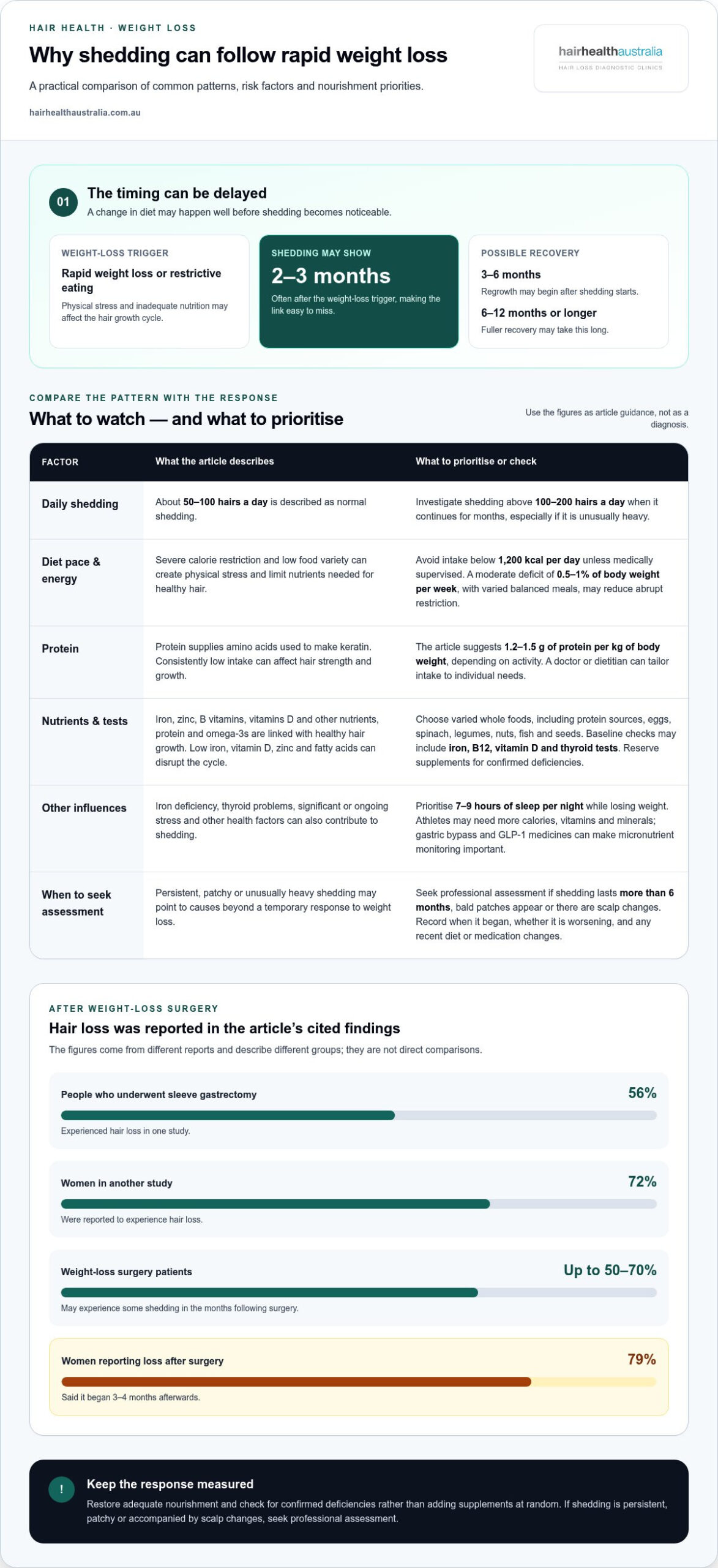
Hair shedding after rapid weight loss often appears with a delay: crash dieting and hair shedding are commonly linked through physical stress and inadequate nutrition, with shedding often becoming noticeable 2-3 months after the weight-loss trigger. The delay can make the connection easy to miss, even when the diet has already changed.
If you’ve noticed more hair coming away in the shower or brush, it’s understandable to wonder whether the change will last. Weight-loss-related shedding is often temporary, but regrowth takes time: it may begin within 3-6 months after shedding starts, while fuller recovery can take 6-12 months or longer.
This article explains how restrictive eating can affect the hair growth cycle, which nutrients support healthy hair and what may help recovery. You’ll also learn when shedding warrants further assessment, so you can respond with clear information rather than making sudden dietary changes or taking supplements without a known need.
Key Takeaways
- Rapid weight loss can place physical stress on the body, while restrictive eating may leave hair without the nutrients needed for healthy growth.
- Protein provides the amino acids used to make keratin, so consistently low intake can affect hair strength and growth.
- Telogen effluvium shifts more hair follicles into a resting phase, which can lead to diffuse shedding rather than immediate thinning in one spot.
- Prioritise balanced nourishment and avoid starting supplements without evidence of a deficiency.
- Persistent shedding, patchy loss or other concerning changes are reasons to seek a professional assessment for possible underlying causes.
Why can hair loss occur after weight loss?
Rapid weight loss can place stress on the body, while restrictive eating may reduce nutrients needed for healthy hair growth. Crash dieting and hair shedding are linked through changes in the body’s stress response and nutrient intake.
Rapid weight loss as a shedding trigger
A crash diet can trigger shedding when severe calorie restriction or rapid weight loss places physical stress on the body. Hair follicles may shift out of active growth, so increased shedding can appear later, rather than during the diet itself.
In practice, crash dieting and hair shedding may be separated by several months. Shedding commonly becomes noticeable 2-3 months after the weight-loss trigger, which can make the connection less obvious. A gradual approach may reduce risk: a moderate deficit of 0.5-1% of body weight per week and varied, balanced meals support weight loss without abrupt restriction.
When weight-loss-related hair loss is concerning
Shedding deserves attention when it is persistent, patchy or unusually heavy. Normal daily shedding is about 50 to 100 hairs; investigate shedding above 100-200 hairs per day when it continues for months.
Shedding that lasts more than 6 months, visible bald patches or scalp changes warrant professional assessment. These patterns can point to causes beyond a temporary response to weight loss. Keep a record of when shedding began, whether it is worsening, and any recent changes in diet or medication.
Risk factors during weight loss
Risk rises when a diet removes too much energy or variety. Avoid intake below 1,200 kcal per day unless medically supervised, and prioritise 7-9 hours of sleep per night while losing weight.
People who exercise need nutrients, while athletes require more calories, vitamins and minerals than average. Athletes are also at higher risk for anaemia, which is associated with iron deficiency. Gastric bypass and weight-loss medicines such as GLP-1s can make micronutrient monitoring important.
Hair loss can also follow weight-loss surgery. In one study, 56% of people who underwent sleeve gastrectomy experienced hair loss; another found it in 72% of women. Among women reporting loss after surgery, 79% said it began 3-4 months afterwards. Up to 50-70% of weight-loss surgery patients experience some shedding in the months following surgery.
Other causes to check
Other causes of shedding include iron deficiency, thyroid problems and ongoing stress. Iron deficiency is a common cause of hair loss, while thyroid function can be assessed alongside iron, B12 and vitamin D levels.
Also consider nutritional deficiencies, thyroid issues, significant stress and other health factors. A healthcare professional can assess possible causes and advise on suitable next steps. Treating a nutritional shortfall alone won’t address shedding caused by something else.
How to Recover from Hair Loss After Crash Dieting?
Recovery starts with restoring adequate nourishment and addressing any confirmed deficiency, rather than adding supplements at random. A varied diet with protein, iron, zinc, B vitamins, vitamin D and omega-3s supports the nutrients involved in healthy hair growth.
What diet and protein intake support regrowth after weight loss? Choose balanced meals with varied whole foods, and aim for 1.2-1.5 g of protein per kg of body weight, depending on activity. A dietitian or doctor can tailor intake to your needs.
Nutritional deficiencies and low calorie intake
Very low calorie intake can restrict the protein, vitamins and minerals needed for normal hair functions. Avoid eating below 1,200 kcal per day unless medically supervised; a doctor should discuss and approve a diet so calorie reduction doesn’t compromise nourishment.
Restrictive eating may affect hair texture and volume as well as increase shedding. If weight loss has involved skipped meals or cutting out food groups, review your eating pattern with a dietitian or doctor. Aim for a sustainable, varied diet rather than replacing meals with supplements.
Nutrients linked to hair shedding
Low iron, vitamin D, zinc and fatty acids can disrupt the hair growth cycle. Protein and vitamins A, C, D and E, as well as iron and zinc, also support healthy hair. Varied meals can include eggs, spinach, legumes and nuts such as cashews, which provide nutrients including iron and zinc.
Include whole-food sources of B vitamins and omega-3s as part of a balanced diet. Fish, nuts and seeds provide omega-3 fatty acids, while vitamin D may play a role in hair growth. Supplements are best reserved for deficiencies confirmed by blood tests.
Iron deficiency and psychological stress
Iron supports hair growth, and low iron can contribute to unexpected or increased hair loss. As iron deficiency is a common cause of hair loss, checking iron status can help distinguish a nutritional cause from shedding associated with rapid weight loss.
Psychological stress is another possible trigger: serious emotional trauma or chronic stress can affect the hair cycle. If tests identify low iron, discuss suitable treatment with a health professional. Vitamin C can enhance iron absorption, but don’t take iron supplements without a confirmed deficiency.
Preventing nutrient deficiencies
Before a major diet or weight-loss treatment, arrange baseline iron, B12, vitamin D and thyroid tests. These results can help identify existing issues and guide a more suitable eating plan. A doctor or dietitian can tailor calorie reduction to your health needs and activity.
Keep meals varied, include protein sources, and avoid unnecessary food-group restrictions. If you’re unsure whether shedding relates to nutrition or another cause, a hair health check can help assess the concern alongside appropriate medical evaluation.
Protein and keratin in hair growth
Hair strands are made of protein fibres, and dietary protein supplies the amino acids needed for hair growth and keratin production. If weight loss has reduced your intake, consider the quality and balance of meals as well as the amount of protein.
Protein’s role in hair follicles
Hair follicles use amino acids from dietary protein to build growing hair fibres. Adequate intake supports this process, while consistently low intake can weaken hair and contribute to hair loss.
When losing weight, include a protein source regularly instead of relying on occasional high-protein meals. Greek yoghurt at breakfast, tofu at lunch or fish at dinner are examples. These foods provide protein, but they don’t replace a varied diet.
Low-protein diets and hair growth
A low-protein diet can limit the amino acids available to support hair growth. Inadequate protein may also cause more follicles to enter the resting phase, increasing shedding instead of sustaining active growth.
Restrictive menus can make adequate protein harder to achieve. A day built around salad, fruit and low-protein snacks may not meet an individual’s needs. Requirements depend partly on activity, so an eating plan for weight loss should account for exercise as well as calorie reduction.
Protein and micronutrient intake
Protein is part of a broader nutritional pattern; it doesn’t provide every nutrient involved in healthy hair. Iron, zinc, B vitamins and vitamin D also matter. Inadequate iron, vitamin D, zinc and fatty acids can disrupt the hair growth cycle.
A balanced diet combines protein foods with other nutrient sources. For example, lentils provide protein alongside minerals, while fish can contribute protein and omega-3 fatty acids. Variety is useful because replacing meals with one protein product may leave gaps in other nutrients.
Protein and keratin production
Keratin forms the structure of hair, and the body uses amino acids to produce it. An unbalanced diet may not provide all the essential amino acids needed for keratin production, even if it contains some protein.
A suggested intake is 1.2-1.5 g of protein per kg of body weight, depending on activity. This is a guide, not a universal target: an active person and someone with different health needs may require different planning. A dietitian or doctor can help tailor an eating plan while weight loss continues.
Telogen effluvium and the hair growth cycle
Telogen effluvium is temporary, diffuse shedding that can follow a physical or emotional trigger. After rapid weight loss, the delay before visible shedding can make the cause less obvious.
Crash dieting and acute telogen effluvium
Acute telogen effluvium occurs when a trigger pushes more hair follicles prematurely into the resting phase. The affected hairs then shed instead of continuing their normal growth.
Crash diets can create this trigger through rapid weight loss, bodily stress and inadequate nutrition. The effect isn’t usually visible straight away: acute telogen effluvium linked to rapid weight loss typically begins around 3 months after the trigger and lasts about 6 months.
The timing can be confusing. Someone may stop a restrictive diet before noticing increased shedding, but the earlier change in weight or food intake may still be relevant.
Telogen effluvium after rapid weight loss
After rapid weight loss, telogen effluvium can cause diffuse shedding across the scalp rather than loss from one isolated spot. Normal shedding is about 50 to 100 hairs per day; noticing more hair in a brush or shower can help you track a change.
Shedding may begin three to four months after rapid weight loss and continue for up to five to six months. This delay reflects the hair cycle: follicles enter a resting phase before the affected strands are released.
Keep a simple record of when weight loss began, when shedding appeared and whether it continues. These dates can help show whether the pattern fits a delayed response or needs assessment for another cause.
Weight loss as a trigger
There isn’t a specific amount of weight loss that triggers telogen effluvium for everyone. Relevant factors include how quickly weight changes, whether the diet provides adequate nutrients and whether the body is also under stress.
A moderate weight-loss deficit of 0.5-1% of body weight per week is recommended to reduce hair-loss risk while losing weight. Crash diets can create a sharper change in intake and body weight, making the overall pattern more important than a single number on the scales.
Stress also matters. Telogen effluvium can follow serious emotional trauma or chronic, ongoing stress, so weight loss may not be the only event worth noting. If shedding persists beyond 6 months, becomes patchy or appears unusually heavy, consult a healthcare professional to assess other possible causes.
Timing and duration of hair shedding
The delay between losing weight and noticing shedding can obscure the connection. Tracking the trigger, onset and duration can help distinguish a temporary response from persistent hair loss that needs further assessment.
When shedding may begin
Hair shedding after weight loss commonly becomes noticeable 2-3 months after the weight-loss trigger. This delay means the dietary change may have ended before extra hair appears in the shower, brush or on clothing.
Acute telogen effluvium linked to rapid weight loss typically begins around 3 months after the trigger. After sleeve gastrectomy, hair loss lasted an average of 5.5 months among women who reported it. These timelines show why recording both the start of weight loss and the first signs of shedding can help clarify the pattern.
Write down when a major dietary change, weight-loss treatment or surgery occurred. Then note when shedding starts and whether it changes. A brief timeline can give a healthcare professional useful context when assessing hair loss.
How long shedding can continue
Acute telogen effluvium linked to rapid weight loss typically lasts about 6 months. Shedding after weight loss may continue for 6 months or more before returning to baseline, while chronic telogen effluvium lasts longer than 6 months.
These descriptions refer to different patterns, not a fixed timeline for everyone. The trigger, ongoing dietary restriction and any underlying iron deficiency can affect the course. Persistent shedding deserves attention, particularly after the original weight-loss trigger has passed.
- About 2-3 months after the trigger: shedding may first become noticeable.
- About 3-6 months after shedding begins: regrowth may start.
- 6-12 months or longer after hair loss: fuller recovery may take this long.
The timeline distinguishes the start of regrowth from fuller recovery. New growth can begin while visible density is still changing, so assess progress over time rather than judging it on a single day.
Supporting recovery and knowing when to seek help
A balanced diet helps restore the nutrients hair growth relies on. If dietary restriction contributed to shedding, maintaining adequate nourishment matters more than trying several supplements without evidence of a deficiency.
Shedding that continues beyond 6 months, becomes patchy or appears unusually heavy should be assessed. A professional can consider whether ongoing weight loss, iron deficiency or another condition may be contributing, rather than assuming the original diet explains everything.
Use a hair health check to take the next step in understanding persistent changes in shedding and recovery.
Hair Health Australia: Male Hair Loss Treatment
In Sydney, Hair Health Australia provides Male Hair Loss Treatment for men concerned about ongoing thinning or hair loss after weight changes. Its non-surgical regrowth programs address thinning hair and pattern baldness, with a focus on hair density and scalp health.
Consider discussing treatment if shedding persists, follows a pattern or continues despite restoring balanced nutrition. Hair loss can have causes beyond dieting, so persistent changes warrant individual assessment rather than relying on supplements alone. Hair Health Australia also offers Female Hair Loss Treatment for women experiencing thinning or hair loss.
To discuss your hair loss concerns and possible treatment options, contact Hair Health Australia in Sydney.
Take a considered next step for your hair
The link between crash dieting and hair shedding can be unsettling, but uncertainty needn’t dictate your next step. Keep your nourishment steady, note ongoing changes and avoid trying multiple supplements without a clear reason. A measured approach gives you a clearer basis for deciding what support may help.
If hair loss continues or affects your confidence, Hair Health Australia offers Male Hair Loss Treatment and Female Hair Loss Treatment in Sydney. The right next step depends on your hair-loss pattern and circumstances, so an individual assessment can help clarify suitable options.
Arrange a hair health check with Hair Health Australia to discuss your concerns and explore what to do next. You can move forward with a clearer understanding and a plan that feels manageable.
Frequently Asked Questions
How Common Is It?
Crash dieting has been identified as a cause of diffuse hair loss, but available findings don’t establish how common it is among all dieters. In a study of 180 women with diffuse hair loss, crash diets were identified as a cause in eight cases. This finding describes that group, not the likelihood for every person losing weight. Hair shedding after weight-loss surgery is also reported, but surgery-related figures don’t measure dieting alone.
What nutrients are important for preventing hair loss?
Protein, iron, zinc, B vitamins, vitamins A, C, D and E, and omega-3 fatty acids all support healthy hair. A practical meal could combine eggs or legumes with vegetables, then include fish, nuts or seeds elsewhere in the day. Variety matters because one food or supplement can’t provide every nutrient. Supplements should be taken when blood tests identify a deficiency, rather than as a precaution.
Can crash dieting cause hair shedding?
Yes. Crash dieting can contribute to shedding by placing physical stress on the body and restricting the protein, vitamins and minerals needed for hair growth. Skipped meals or sharply reduced food variety can also affect hair texture and volume. If shedding follows a restrictive diet, note changes to your eating and weight pattern, and discuss persistent hair loss with a healthcare professional.
What type of hair loss is caused by rapid weight loss or crash dieting?
Rapid weight loss can trigger telogen effluvium, a form of temporary, diffuse shedding. Rather than creating one isolated bare patch, it tends to cause increased shedding across the scalp as more follicles enter a resting phase. Patchy loss or distinct scalp changes don’t fit that typical description and warrant assessment for other causes. The pattern can guide evaluation, but doesn’t identify the cause on its own.
How long after crash dieting does hair shedding start?
Shedding commonly becomes noticeable 2-3 months after the weight-loss trigger. For example, someone who changed their diet in autumn might notice increased shedding later, rather than during the first weeks of restriction. Keep a brief record of when the diet began, when weight changed and when shedding appeared. That timeline can help a healthcare professional assess whether the events are related.
Which nutrient deficiencies from crash dieting can cause hair loss?
Low iron, zinc, vitamin D and fatty acids can disrupt the hair growth cycle, while inadequate protein can weaken hair and contribute to loss. Iron deficiency is a common cause of hair loss. A blood test can help identify a deficiency; avoid starting iron or other supplements without evidence of need. Foods such as eggs, legumes, nuts and spinach can provide nutrients as part of varied meals.
How long does hair shedding last after restoring a balanced diet?
Shedding can continue for 6 months or more before returning to baseline, even after eating becomes more balanced. Regrowth may begin within 3-6 months after shedding starts, while fuller recovery can take 6-12 months or longer. These timelines start at different points: restoring nutrition doesn’t instantly reset the hair cycle. Note whether shedding is easing over time, and seek assessment if it persists beyond 6 months.
Will hair grow back after crash-diet-related shedding?
Hair often grows back after diet-related shedding once adequate nutrition is restored and the body adjusts. A balanced diet can support hair growth returning to normal, but visible fullness takes longer than the first signs of regrowth. Keep meals varied and avoid restrictive dieting while recovery is under way. If loss becomes patchy or continues beyond 6 months, seek professional assessment to investigate other possible causes.