
Does your crown look fuller in the mirror, then suddenly more visible in overhead light or a photo? That contrast can be unsettling, especially when styling products seem to expose the scalp rather than conceal it. A female crown thinning treatment isn’t one-size-fits-all: the right next step depends on what may be causing the change.
It’s understandable to want a gentle styling fix you can try straight away, while also wondering whether the thinning is temporary or needs assessment. This guide covers practical ways to make the crown less noticeable, why thinning can have different causes, and what to note if you seek personalised advice.
You’ll find ideas for adjusting your part, adding volume and choosing products, along with signs that may make a closer look helpful. Genetics, hormonal changes, nutritional factors and stress can all play a role, so noting when the change began and how it has progressed may help inform a discussion. For women in Sydney, Hair Health Australia offers personalised, non-surgical hair-loss treatment. A Hair Health Check may be a relevant next step if you’re looking for individual guidance.
Key Takeaways
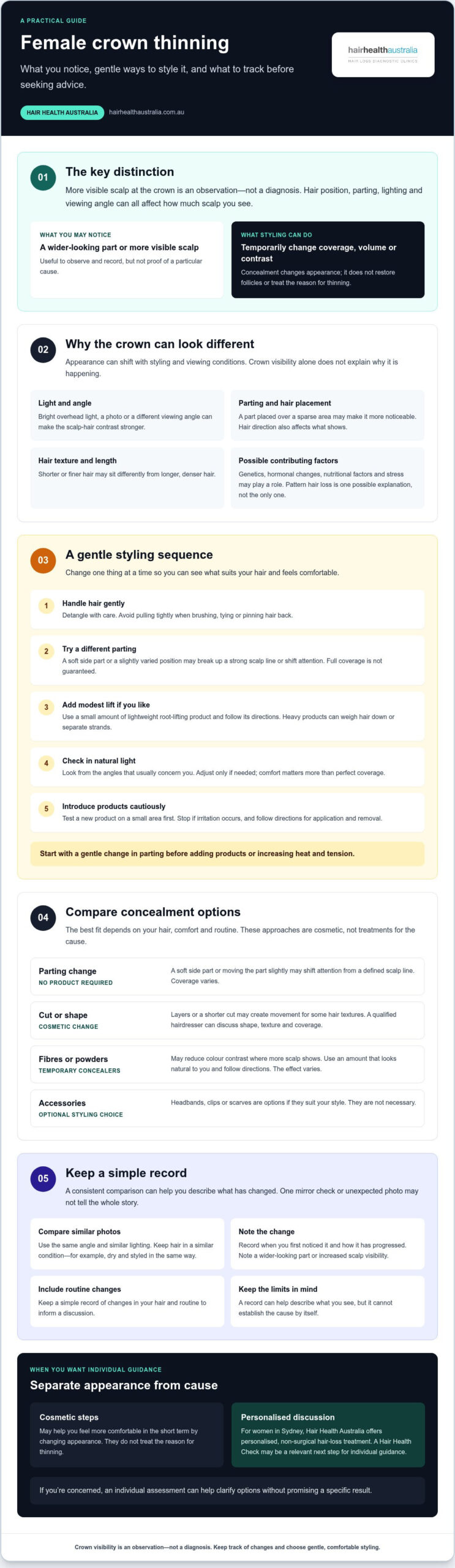
- Crown visibility describes a change in appearance, but it doesn’t identify the cause on its own.
- Try gentle styling adjustments and a parting that feels comfortable. A small change may shift attention without fully covering the crown.
- Compare styling changes, volumising products and temporary scalp concealers to find an approach that suits your routine.
- For a more informed female crown thinning treatment discussion, keep a simple record of changes in your hair and routine.
- If you’re concerned, an individual assessment can help clarify options without promising a specific result.
Female crown thinning: what you may notice and what concealment can do
Noticing more scalp at your crown can feel confronting, particularly in a photo or under bright overhead lighting. But crown visibility alone doesn’t reveal why it’s happening. The way your hair sits, the direction of the light and the angle you’re viewing it from can all affect how much scalp shows.
Crown thinning is a visible reduction in hair coverage around the top or back of the head, but it isn’t a diagnosis by itself. A wider-looking part or more visible scalp is an observation, not proof of a particular cause. Pattern hair loss is one possible explanation; the Pattern hair loss overview describes its typical presentation, including in women. Other factors may also contribute, so consider the appearance in context.
Lighting can create stronger contrast between hair and scalp, while a part placed directly over a sparse area may make it more noticeable. Hair length, texture and styling matter too. Shorter or finer hair may sit differently from longer, denser hair, and products that separate strands can leave more scalp exposed. These details can change what you see without necessarily showing that the underlying hair has changed.
How to tell whether the crown looks different
Rather than relying on one mirror check or an unexpected photograph, compare pictures taken from the same angle and under similar lighting. Keep your hair in a similar condition, such as dry and styled in the same way. Note what changes over time. A wider part or increased scalp visibility is useful to record, but it can’t establish a cause on its own.
What styling can and cannot change
Styling can temporarily alter coverage, volume and the contrast between your hair and scalp. A different part, for example, may shift attention away from one area, though it won’t guarantee full coverage. Results vary with hair texture, length and the pattern of thinning, so choose an approach that feels comfortable rather than pulling tightly or repeatedly handling your hair.
Concealment changes appearance; it doesn’t restore follicles or treat the reason for thinning. If you’re considering a female crown thinning treatment, separating cosmetic steps from options intended to address hair loss can help set realistic expectations. Concealment may help you feel more comfortable in the short term, while keeping track of the change can help inform what to consider next.
How to hide thinning hair at the crown: gentle styling steps
A small change to how you part or lift your hair may soften the look of the crown without adding tension. Start gently and adjust one thing at a time. This makes it easier to see what suits your hair and feels comfortable.
- Handle hair gently. Detangle with care and avoid pulling tightly when brushing, tying or pinning it back.
- Try a different parting. A soft side part or a slightly varied position can break up a strong scalp line. It may shift attention, but won’t guarantee full coverage.
- Add modest lift if you like. Use a small amount of a lightweight root-lifting product, following its directions. Heavy products can weigh hair down or separate strands, making the scalp more visible.
- Check the result in natural light. Look from the angles that usually concern you, then adjust only if needed. A style that feels secure and comfortable matters more than perfect coverage.
- Introduce products cautiously. Test a new product on a small area first. Stop using it if irritation occurs, and follow the directions for application and removal.
Start with a gentle change in parting before adding products or increasing heat and tension.
Partings, cuts and volume at the crown
A soft side part or moving your part slightly between washes may reduce the appearance of a defined scalp line. Layers or a shorter cut can create a sense of movement for some hair textures, while other hair may sit better with a different shape. A qualified hairdresser can discuss options with your hair’s texture and coverage in mind. A cut or styling change is cosmetic, not a female crown thinning treatment.
Fibre products, powders and accessories
Temporary fibre or powder concealers can reduce the colour contrast between hair and scalp when applied where more scalp shows. Follow the product directions, use an amount that looks natural to you, and remove it gently as instructed. The effect is cosmetic and may vary with hair colour, texture and the thinning pattern.
Headbands, clips or scarves are also options if they suit your style, but they’re not necessary. Choose accessories that feel comfortable and don’t pull on your hair. For a broader overview of female pattern hair loss and why individual assessment matters, see the American Academy of Dermatology’s information. If you’d like individual guidance beyond styling, you can explore the Hair Health Check as a possible next step.
Which crown-thinning concealment options suit your hair and routine?
The best fit depends on how much time you want to spend styling, how often you want to use a product and the look you’re comfortable with. Hair colour, texture, density, and the size and position of the area all affect how well an option blends. A result that looks subtle on one person may be more noticeable on another.
| Option | Effort and visual effect | Upkeep and possible drawbacks | May suit |
|---|---|---|---|
| Styling changes | Usually low effort once you find a parting or shape that works. Can shift attention or create the appearance of more volume. | May need adjusting each time you style your hair. Coverage is limited by your hair’s length, texture and thinning pattern. | Everyday routines and people who prefer using little or no product. |
| Volumising products | Can add lift or body when applied sparingly, particularly near the roots. | Often needs reapplication during styling. Too much product may weigh hair down, separate strands or leave residue. | Those who want extra lift and are comfortable spending a little more time styling. |
| Temporary scalp concealers | Fibres or powders may reduce scalp-to-hair colour contrast in selected areas. | Require careful application and removal. A mismatched shade, visible residue or scalp sensitivity may affect the finish. | Occasional use, such as for a particular event, rather than a necessary daily step. |
Choosing between a styling change and a concealer
If you want a low-product, everyday approach, begin with a gentle styling adjustment. Concealers are an optional temporary choice for selected occasions, not a requirement. Follow the product directions, including guidance on removal, and discontinue use if discomfort or irritation develops. If you’re weighing cosmetic options against a female crown thinning treatment, remember that concealment only changes appearance.
When a cosmetic approach may not be enough
If thinning continues or changes quickly, or you notice patchy loss or scalp discomfort, seek timely health advice rather than relying only on appearance management. These signs don’t establish a cause, but they’re worth discussing with a health professional. For general background on female pattern hair loss and possible clinical approaches, Harvard Health Publishing offers further reading. If you’re seeking individual guidance in Sydney, Hair Health Australia’s Hair Health Check may help inform a discussion of suitable options.
Crown thinning: what to track and when to seek advice
Female crown thinning can have different explanations, and the appearance of your hair alone can’t establish the cause. Pattern-related thinning and temporary shedding are possibilities, but they aren’t self-diagnoses. Changes in health, medicines, hormones, nutrition or stress may also be relevant. Choosing a female crown thinning treatment without considering the wider picture may not be appropriate.
Identifying the likely cause matters because a treatment that may suit one explanation might not be suitable for another. If the change persists, appears suddenly, progresses noticeably or occurs in patches, speak with an appropriate health professional, such as your GP or a dermatologist. Seek advice sooner if you’re also experiencing scalp discomfort. You don’t need to wait until you have a complete record before asking for help.
What information to prepare for an assessment
A brief timeline can make it easier to describe what you’ve noticed. Jot down:
- When you first noticed the change and whether it seems to be progressing.
- Where thinning is most visible and whether the pattern has changed.
- Any recent health changes, medicines or major life events you’d like to discuss.
- Whether you’ve noticed other changes, such as increased shedding or scalp discomfort.
If you already have photos taken under similar conditions, bring them along. They may help show how the appearance has changed over time, but don’t delay seeking advice to collect more.
Why different causes may need different approaches
Pattern-related thinning may develop gradually in a particular distribution, while temporary shedding can follow a different course. These descriptions are possibilities, not a way to identify your own cause from appearance alone. An individual assessment can help inform a discussion about what options may be suitable, while recognising that no approach is right for every person or every cause. For further general reading, see this guide to early signs of alopecia in women.
If you’re seeking personalised guidance in Sydney, you can explore the Hair Health Check as a possible next step. It can help inform a discussion of options, but it shouldn’t be treated as a guaranteed diagnosis or outcome.
A practical next step for female crown thinning treatment
A measured approach can help you move from concern to clearer decisions: observe what’s changing, use styling that feels comfortable, then seek advice if you’re worried or the change persists. Concealment can be useful day to day, but it doesn’t explain why thinning is happening or determine which options may be appropriate.
An assessment can help inform a discussion about possible causes and suitable next steps. It can’t guarantee a diagnosis or a particular result. Before considering a female crown thinning treatment, make sure you understand what the option involves, what it may realistically address and whether it fits your individual circumstances.
Questions to ask before considering treatment
Taking a few questions to a discussion can help you understand the choices without feeling rushed. Consider asking:
- What might be contributing to the thinning, and is any further assessment appropriate?
- Which options may suit my situation, and what are their limitations or ongoing commitments?
- How should progress be monitored, and when would it make sense to review the approach?
Clear answers can help you weigh up options with realistic expectations. You’re entitled to take time to consider them before deciding whether to proceed.
How to take a calm next step in Sydney
Hair Health Australia provides personalised, non-surgical hair-loss treatment programmes for women in Sydney. Its Hair Health Check may be a starting point for individual guidance and a discussion of possible options. It isn’t a promise of a specific diagnosis or outcome, and you don’t have to enrol in treatment simply because you’re exploring your choices.
If you’re concerned about a change in your crown, take a gradual approach: keep track of what you notice, choose styling that’s comfortable, and seek individual advice if you want help understanding what to consider next. You can explore the Hair Health Check on Hair Health Australia’s website.
Take a considered next step for your crown
Crown visibility can change with lighting and styling, so one photo or mirror check can’t explain what’s causing it. Gentle styling or a temporary concealer may help you feel more comfortable, while tracking changes over time can give you useful context if you decide to seek advice.
The right female crown thinning treatment depends on the reason for the change and your individual circumstances. An assessment can help inform a discussion of suitable options, but it can’t promise a particular diagnosis or result. Hair Health Australia offers personalised female hair-loss treatment programmes, with a focus on clinically backed, non-surgical approaches.
If you’d like individual guidance in Sydney, complete the Hair Health Check as a possible starting point. There’s no need to rush into a decision. A clearer understanding of your options can help you choose a next step that feels right for you.
Frequently Asked Questions
How can I hide thinning hair at the crown as a woman?
Try a gentle styling change first, such as shifting your part slightly or using a small amount of lightweight product to lift the roots. Temporary fibres or scalp powders may reduce the contrast between hair and scalp for selected occasions. Choose an approach that suits your hair texture and feels comfortable, and follow product directions. Concealment can change the appearance, but it won’t address the reason for thinning.
What hairstyle makes thinning at the crown less noticeable?
A soft side part or a part placed slightly away from the most visible area may make the scalp line less prominent. Layers or a shorter cut can add movement for some hair types, but results depend on texture, length and the pattern of thinning. A qualified hairdresser can discuss styling choices that work with your hair. Haircuts and styling are cosmetic options, not treatment for hair loss.
Can hair fibres or scalp powder cover female crown thinning?
Hair fibres or scalp powder may temporarily make the scalp less visible by reducing colour contrast with your hair. The finish depends on shade match, hair texture, density and the area being covered, so it may take some experimenting to find a natural-looking result. Follow the product’s directions for use and removal. Stop using it if irritation or discomfort develops, and remember that concealers don’t treat thinning.
Why is my hair thinning at the crown?
Crown thinning can have several possible explanations, and appearance alone can’t identify the cause. Pattern-related hair loss is one possibility; temporary shedding or other health and life factors may also be relevant. Changes in hormones, health, medicines or routine are useful to mention when seeking advice. Avoid diagnosing yourself from a photograph or parting. A health professional can help assess the change and discuss appropriate next steps.
Can female crown thinning grow back?
Whether hair grows back depends on what’s causing the thinning and the individual situation. Some forms of shedding may improve, while other patterns may need a different approach. There isn’t one female crown thinning treatment that suits every cause, so an assessment can help inform a discussion of options and realistic expectations. Avoid starting medicines or supplements without individual clinical advice, particularly if you have other health considerations.
When should I seek advice about thinning at my crown?
Seek advice if thinning persists, changes suddenly, progresses noticeably or appears in patches. Scalp discomfort is another reason to speak with a health professional. A GP or dermatologist can help assess what may be contributing and whether further assessment is appropriate. If you’re in Sydney and want to explore personalised, non-surgical female hair-loss treatment, Hair Health Australia may be a relevant option to consider.
Does changing my part stop crown thinning?
No. Changing your part may make a visible scalp line less noticeable, but it doesn’t stop hair thinning or treat its cause. You could try a soft side part or move the part slightly, then compare the result in similar lighting. If you’ve noticed ongoing or changing thinning, keep a simple record and consider seeking advice rather than relying on styling changes alone.