
Laser hair therapy is a gradual treatment, not a quick fix. For mild to moderate pattern hair loss, low-level laser therapy is most likely to help, with visible regrowth typically appearing between 3 and 6 months. If you’re weighing whether laser hair therapy is worth it, the key is whether your hair loss pattern and treatment expectations align with what it can realistically do.
It’s natural to want a clear timeline before committing to regular sessions. Low-level laser therapy typically requires consistent use over time, so weigh the ongoing routine against the potential benefit.
This article explains how low-level laser therapy works, how its schedule compares with laser hair removal, what clinical studies report about hair density, and which types and stages of hair loss may respond. You’ll also learn when a different approach may be more suitable, so you can make a more informed decision about your next step.
Key Takeaways
- Low-level laser therapy uses light to target the scalp, but its potential benefit depends on the type and stage of hair loss.
- Plan for regular use over months: treatment commonly involves several sessions a week before results can be assessed.
- Clinical studies report increased hair density, while the size of the change and the time it takes can vary.
- Hair and skin colour matter differently for hair-loss therapy and hair removal, so don’t assume the same laser treatment suits both.
- Sudden hair loss can have an underlying cause; understanding what’s driving the change helps guide the next step.
Laser Treatment for Hair Loss: Does It Work?
Low-level laser therapy may support hair growth for some people with mild to moderate pattern hair loss. It is not laser hair removal: the treatments use light differently and have different aims.
Low-level laser therapy, also called red light therapy, directs low-intensity light onto the scalp. Devices commonly use visible red light at 630-680 nanometres. Some use near-infrared wavelengths of 810-850 nanometres. The light reaches the scalp without aiming to destroy hair follicles. Instead, treatment is designed to stimulate follicle activity and support hair growth.
The distinction matters. Scalp devices are intended to support existing follicles in thinning areas, not remove unwanted hair. Results depend on consistent use and whether the hair-loss pattern suits this approach.
Research reports increased hair density with low-level laser therapy, but treatment isn’t a universal answer. A 2014 study described it as appearing safe and effective for hair growth in men and women. Mild scalp warmth or tingling that fades quickly is the most commonly reported side effect. Laser therapy shouldn’t be used by people taking photosensitising medicines.
Laser hair removal has a different purpose. It directs concentrated energy towards pigment in unwanted hair, damaging follicles to reduce future growth. It works best when hair and skin colours contrast clearly, such as dark hair against lighter skin. Regrowth can still occur after a course of treatment.
If you’re considering a device or clinic treatment in Australia, look for an approach intended for scalp hair loss and follow its directions. A treatment plan should explain how the device is used and how progress is assessed. Photosensitising medicines are a reason not to use laser therapy.
Don’t assume Medicare or private health cover applies to laser devices or clinic sessions. Medicare rebates depend on whether a service is eligible, while private benefits depend on policy terms. Device purchases and clinic treatments may be assessed differently.
Costs vary between buying a device and attending clinic sessions. Device type, treatment plan, session frequency and duration affect the overall cost. For clinic treatment, the price depends on the case and is given after a quote request. Consider the ongoing commitment as well as the initial outlay.
Laser hair removal commonly involves 4 to 8 treatments, usually spaced several weeks apart. It may reduce growth for months or sometimes years, but hair can grow back. That schedule and goal differ from low-level laser therapy for scalp thinning.
Number and spacing of treatment sessions
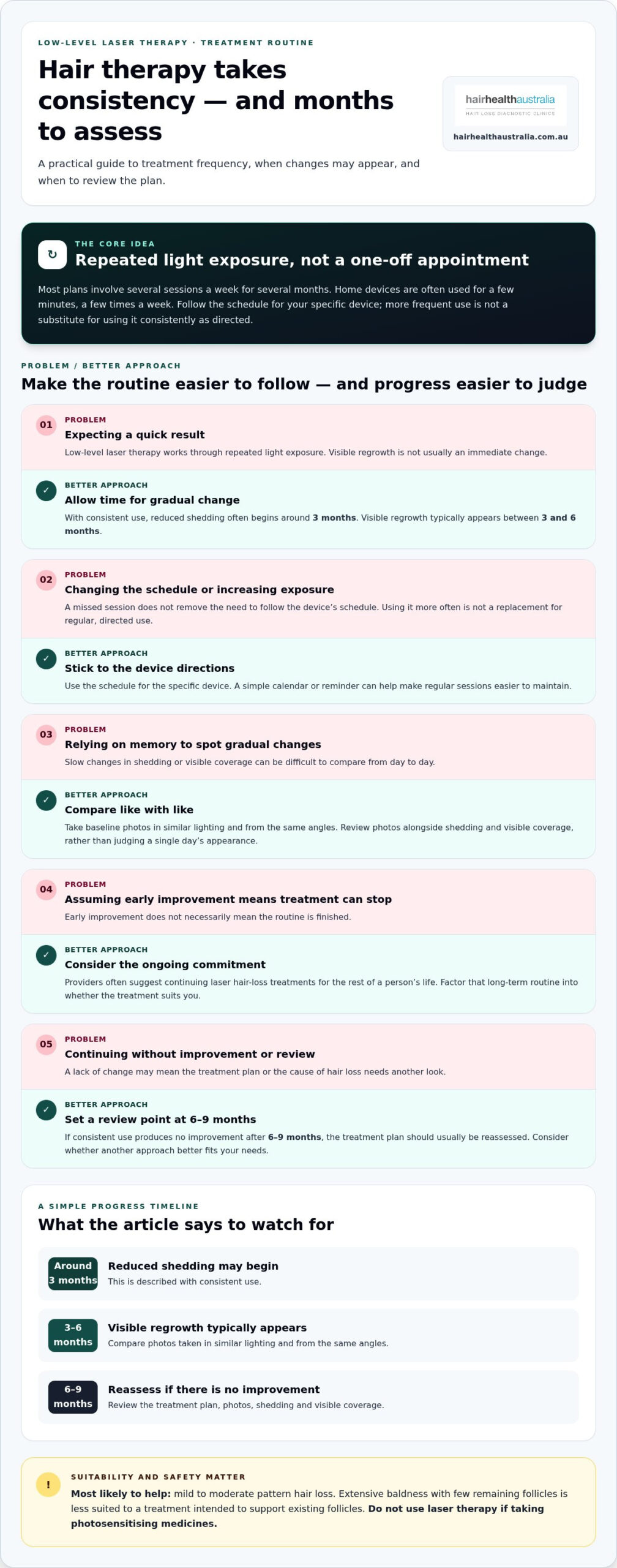
Low-level laser therapy works through repeated light exposure, not a single appointment. The theory is that red light influences activity in scalp follicles and supports the hair-growth cycle. Each session adds another exposure, so spacing and consistency matter. A missed session doesn’t replace the need to follow the device’s schedule.
Most treatment plans involve several sessions a week for several months before results appear. Home devices are often used for a few minutes, a few times a week. Follow the schedule for the specific device, rather than increasing exposure independently. More frequent use isn’t a substitute for consistent use as directed.
During a session, the device delivers light to the scalp. Depending on its design, it may cover an area at once or require positioning across different thinning zones. The treatment itself is brief, but covering the intended scalp areas consistently takes attention. A simple calendar or reminder can help make the routine easier to maintain.
Give the process time. Reduced shedding often begins around 3 months with consistent use, while visible regrowth typically appears between 3 and 6 months. Take baseline photographs under similar lighting and from the same angles. Comparing them over time can make gradual changes easier to notice than relying on memory.
Early improvement doesn’t necessarily mean treatment can stop. Providers often suggest continuing laser hair-loss treatments for the rest of a person’s life. That ongoing commitment matters when considering whether the schedule fits your routine. The treatment plan should also account for the device’s directions and the pattern of thinning being treated.
Set a review point before starting. If consistent use produces no improvement after 6-9 months, the treatment plan should usually be reassessed. Compare photographs, shedding and visible coverage, rather than judging one day’s appearance. A lack of change may prompt a closer look at the hair-loss cause or whether another approach better fits your needs.
For a clearer starting point, a hair health check can help put thinning and treatment choices into context. This is especially useful before committing to a routine that may continue long term.
Treatment effectiveness by hair and skin colour
Hair and skin colour affect laser hair removal differently from low-level laser therapy. Hair removal targets pigment in the hair, so contrast between hair and skin matters. Scalp therapy uses low-intensity light to support follicles. Don’t use hair-removal results to predict how scalp treatment will work.
For hair removal, dark hair against lighter skin provides clearer contrast for targeting. When hair and skin colours are similar, the contrast is reduced, which can affect effectiveness. This distinction concerns unwanted-hair removal, not whether low-level laser therapy may suit scalp thinning.
For scalp treatment, the pattern and stage of hair loss matter more than hair-colour contrast. Mild to moderate pattern hair loss is the group most likely to benefit. The treatment aims to support follicles in thinning areas, so extensive baldness with few remaining follicles is less suited to that goal.
Hair colour alone can’t show whether scalp follicles may respond. Consider where thinning occurs, how much density remains, and whether the pattern is consistent with pattern hair loss. These details help identify whether the area may suit treatment or needs further assessment.
Studies and patient reports have not reported serious side effects from low-level laser therapy. Mild scalp warmth or tingling is the most commonly reported effect and usually passes quickly. These observations don’t mean every device or schedule has identical effects.
Medication is another safety consideration. Do not use laser therapy while taking photosensitising medicines. Include medication use when assessing whether treatment is suitable, rather than relying on hair colour or appearance alone.
Long-term expectations also matter. Providers often suggest continuing laser hair-loss treatments for the rest of a person’s life. That maintenance recommendation makes ongoing use part of the decision, not just the first treatment period. Consider whether a repeated routine fits your circumstances and whether you can assess progress consistently.
Separate the decision into two questions: does the hair-loss pattern suit low-level laser therapy, and can you sustain regular use? Mild to moderate pattern thinning is the more suitable starting point. Sudden or rapidly changing hair loss calls for medical assessment, as an underlying condition may need attention.
Clinical evidence and hair density results
Clinical studies assess laser therapy using hair counts, thickness and density, which describe different changes. A denser scalp may have more hairs within an area, while thicker strands can improve coverage without increasing follicle numbers. This distinction helps you interpret reported results against your own starting point.
One study of 41 men aged 18 to 48 associated laser treatment with a 39 percent increase in hair growth over 16 weeks. This result describes that study group and timeframe, not a guaranteed outcome for every person. Age, hair-loss cause and treatment consistency can all influence how closely an individual’s experience matches a study.
Other clinical studies compared low-level laser therapy with sham devices. They reported increases of about 15-40 hairs per square centimetre after 16-26 weeks. Some clinical trials also reported 15-40% improvements in hair thickness and density. These are separate measures, so don’t treat the percentages and hair-count figures as interchangeable.
To understand a result, check what researchers counted and when they measured it. A hair-density comparison after 16-26 weeks captures a defined study period. It doesn’t show how the result changes after treatment stops or whether participants maintain the same outcome over a longer period. Those questions matter for a therapy often used continuously.
Clinical evidence also needs context. A sham-device comparison helps distinguish treatment effects from changes seen without active laser exposure. However, a study involving 41 men cannot describe every population or cause of hair loss. The reported 39 percent increase over 16 weeks should be read alongside other studies, rather than as a prediction for one person.
Compare laser therapy with established options as well. Minoxidil has stronger, longer-term evidence than laser therapy and remains a first-line treatment. The approaches differ in evidence, routine and suitability. The useful question is which option fits the diagnosed hair-loss pattern and your ability to continue treatment.
For a practical progress check, take scalp photographs before treatment and repeat them under similar lighting and angles. Compare the same thinning areas rather than relying on an overall impression. Photos won’t replace a measured hair count, but they can help you track visible change and discuss whether to continue or reassess.
Overall, studies show measurable improvements in some groups, including changes in hair counts and thickness. The evidence suggests potential benefit, not a uniform response. Consider study duration, comparison method, measured outcome and the ongoing commitment together when judging whether results align with your expectations.
Suitability by stage and cause of hair loss
Low-level laser therapy is most likely to benefit people with mild to moderate pattern hair loss, so both cause and stage matter. A receding hairline or thinning crown may fit a pattern-loss picture, while sudden, widespread shedding calls for a different assessment. Appearance alone doesn’t establish the cause.
Stage matters because this therapy aims to support follicles in thinning areas, not recreate hair where follicles are no longer active. Visible thinning with remaining hair is a different starting point from extensive baldness. Set realistic expectations around existing coverage rather than expecting a full return to earlier density.
Cause matters just as much. Pattern hair loss is the type most associated with potential benefit from low-level laser therapy. Hair loss can also reflect an underlying condition, which light treatment does not address. Sudden or rapid hair loss needs medical assessment because it can signal a condition requiring attention.
Before committing to regular sessions, use this simple decision sequence:
- Identify whether thinning has developed gradually in a recognisable pattern or appeared suddenly.
- Note which areas have lost density, such as the crown, hairline or wider scalp.
- Consider whether the remaining hair offers a meaningful area for a follicle-supporting treatment.
- Review medicines, because laser therapy should not be performed while taking photosensitising medicines.
These points help frame suitability, but every case is different. Gradual crown thinning with remaining hair, for example, fits the intended treatment group more closely than abrupt shedding across the scalp. Assess the cause first, then consider the affected area and stage.
Set expectations around the treatment’s limits. Mild to moderate pattern loss is the group most likely to benefit, but laser therapy doesn’t stop every cause of hair loss. With more advanced loss, supporting existing follicles is different from restoring extensive lost coverage. Ongoing use is another consideration when weighing the approach.
If the cause or stage is unclear, start by organising a hair health check. It can help put thinning into context before you commit to a repeated treatment routine. Sudden loss, in particular, calls for a doctor’s assessment rather than relying on laser therapy alone.
Hair Health Australia: Male Hair Loss Treatment
Hair Health Australia offers Male Hair Loss Treatment for people addressing thinning hair or pattern baldness. Its non-surgical regrowth programmes use clinically backed methods focused on hair density and scalp health. If laser therapy may not suit your hair-loss stage or cause, a broader treatment approach can help you consider other options.
Hair Health Australia also provides Female Hair Loss Treatment for women experiencing thinning. The free Hair Health Check helps clarify your hair-loss type and active follicle count, so treatment can be customised to your diagnostic results.
For information about treatment options, contact Hair Health Australia or visit hairhealthaustralia.com.au.
Make your next step a considered one
Deciding whether laser hair therapy is worth it starts with matching the treatment to your priorities, not simply choosing a new option. Consider what progress would mean to you: maintaining coverage, improving the appearance of thinning, or understanding why hair loss has started. Clear priorities make it easier to judge whether a plan fits your expectations.
Whether laser therapy makes sense depends on the cause of hair loss, your goals and your ability to sustain the approach. Hair Health Australia’s free Hair Health Check uses Trichoscopy to assess active follicles and diagnose hair-loss type, helping you consider a treatment plan based on your results.
Hair Health Australia provides male and female hair loss treatment. If you’re ready to discuss your concerns and explore a suitable next step, arrange a hair health check.
A clearer understanding of your hair loss is a practical first step towards deciding what to do next.
Frequently Asked Questions
Can I Combine It With Minoxidil, PRP, or Finasteride?
Combining laser therapy with minoxidil, PRP or finasteride requires an individual treatment plan. Evidence for minoxidil is stronger and longer-term than for laser therapy, but that doesn’t establish a specific combined protocol. Keep prescribed medicines unchanged unless the prescriber advises otherwise. Do not use low-level laser therapy while taking photosensitising medicines.
How Long Until I See Results?
Allow several months before judging whether treatment is helping. Reduced shedding often begins around 3 months with consistent use, while visible regrowth typically appears between 3 and 6 months. Photograph the same scalp areas under similar lighting to compare changes fairly. A different hairstyle, wet hair or altered lighting can make density look changed when it hasn’t.
Is Laser Therapy for Hair Growth Worth It?
Whether laser hair therapy is worth it depends on your hair-loss pattern, expectations and willingness to maintain regular use. It may suit people with mild to moderate pattern hair loss who are comfortable waiting for gradual changes. It is less compelling if you expect rapid regrowth or a one-off treatment. Weigh potential improvement against the time and ongoing commitment involved.
Is There Real Scientific Evidence?
Yes, clinical studies have measured changes in hair growth and density, including comparisons with sham devices. Results suggest potential improvement, but they can’t predict an individual outcome. Evidence also varies by duration and measurement method. For a useful comparison, consider the study population, treatment period and whether researchers measured hair count, thickness or another outcome.
What if it doesn’t work for me?
If consistent use hasn’t improved your hair after 6-9 months, reassess the plan rather than simply increasing exposure. Compare photographs, shedding and coverage, then reconsider whether the hair-loss cause and treatment choice align. Sudden or rapid loss needs medical assessment because an underlying condition may require attention. A lack of response is useful information for deciding what to investigate next.
Who is a good candidate?
People with mild to moderate pattern hair loss are most likely to benefit from low-level laser therapy. Remaining hair in thinning areas gives the treatment follicles to target; extensive baldness is less suited to that aim. Cause matters too. Sudden shedding should prompt medical assessment rather than being treated as established pattern loss.
What is laser hair therapy and how does it work for hair loss?
Laser hair therapy for scalp thinning uses low-intensity light, often red light, directed at the scalp. Unlike hair-removal lasers, it isn’t intended to destroy follicles. It aims to stimulate follicle activity and support growth in thinning areas. Devices and schedules vary, so follow the directions for the specific device.
How effective is low-level laser therapy for hair regrowth, and what evidence supports it?
Low-level laser therapy may improve hair density for some people, but the amount varies. Studies report increased hair counts and improvements in thickness or density over defined treatment periods. These findings suggest a measurable effect in some groups, not a guaranteed result for everyone. They can help you compare laser therapy with options such as minoxidil, which has stronger, longer-term evidence.